





Why Choose Amoxicillin Sodium Injection for Global Supply?
Why choose Amoxicillin Sodium Injection for global supply? The answer begins with clinical utility, manufacturing discipline, and dependable access. Injectable amoxicillin can support hospital treatment when oral administration is unsuitable. However, supply decisions must examine more than a product label.
The World Health Organization’s Global Antimicrobial Resistance and Use Surveillance System reports continuing differences in antibiotic access, consumption, and resistance monitoring. Its Model List of Essential Medicines also emphasizes reliable access to quality-assured antibiotics. IQVIA’s Global Use of Medicines reports show sustained pressure on healthcare systems to control medicine spending while protecting treatment continuity. These findings make supply resilience a practical concern, not a marketing phrase.
Quality comes first.
Dr. Tedros Adhanom Ghebreyesus, Director-General of the WHO, stated, “Antimicrobial resistance is one of the top global public health and development threats.” His warning applies directly to responsible antibiotic procurement. A dependable Amoxicillin Sodium Injection supplier should demonstrate GMP compliance, validated sterility controls, batch traceability, stability data, and transparent pharmacovigilance procedures. Buyers should also review packaging performance, transport conditions, registration status, and the supplier’s history of resolving quality deviations.
The case is not flawless. Lower pricing may hide shortage risks, weak documentation, or inconsistent production capacity. A polished brochure cannot replace audit evidence. Hospital pharmacists, distributors, and public-health agencies need measurable proof before approving international supply. For that reason, Amoxicillin Sodium Injection is best evaluated through a balanced lens: therapeutic relevance, verified manufacturing quality, regulatory readiness, and long-term supply reliability. According to WHO surveillance findings and IQVIA market analysis, resilience must be planned before the next procurement disruption, not after it.
Active Ingredient Profile: Amoxicillin Sodium, β-Lactam Action, and Uses
Amoxicillin sodium injection provides a water-soluble form of amoxicillin for controlled hospital administration. It belongs to the penicillin family of β-lactam antibiotics. As a β-lactam, it targets bacterial cell-wall synthesis. The drug binds penicillin-binding proteins and blocks essential cross-linking reactions. This weakens the wall and can cause susceptible bacteria to rupture. That mechanism matters.
Its uses include selected respiratory, urinary tract, skin, and other bacterial infections. Treatment should follow culture results, local resistance data, and approved clinical guidance. Injection may help when oral treatment is unsuitable or rapid systemic exposure is required. It does not treat viral infections. Clinical judgment remains essential.
For global supply, the active ingredient profile deserves careful review, not just a price comparison. Reliable sourcing requires verified identity, assay control, sterility testing, endotoxin limits, and documented stability. Manufacturing sites should follow recognized pharmaceutical quality systems and maintain traceable batch records. Storage and reconstitution instructions also affect practical performance. I would not assume every injectable product behaves identically after preparation. That assumption needs evidence. Procurement teams should examine validated specifications, regulatory documentation, and supply continuity before selection. A consistent sterile product supports safer hospital workflows and more predictable antibiotic use.
WHO AWaRe Access Status and 2023 Essential-Medicines Supply Context
Amoxicillin sodium injection fits the WHO AWaRe Access category, supporting responsible treatment of many susceptible bacterial infections. The 2023 WHO Model List of Essential Medicines includes injectable amoxicillin formulations for hospital use. This status matters. Access antibiotics should remain widely available, quality-assured, and affordable, while stewardship limits unnecessary exposure.
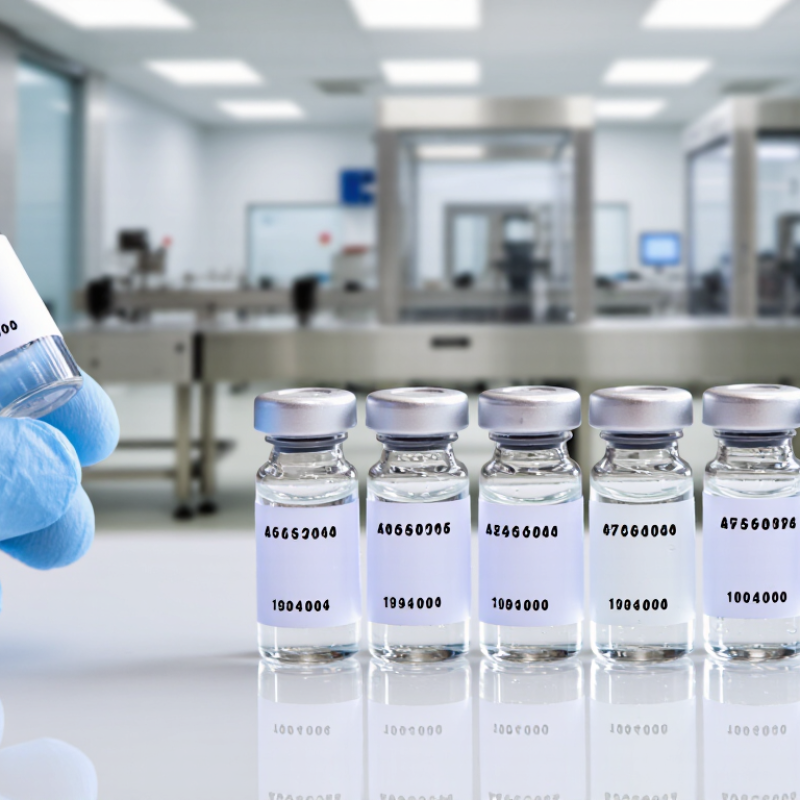
Global supply decisions also need practical evidence. WHO’s 2023 essential-medicines framework emphasizes reliable procurement, suitable dosage forms, and continuity during health-system pressure. Injectable amoxicillin can support hospitals when patients cannot take oral medicines. A vial on a ward shelf represents more than stock. It requires validated manufacturing, sterile production, accurate labeling, and controlled storage. Supply teams should examine registration status, batch documentation, lead times, and backup manufacturing capacity.
The 2023 supply environment exposed weaknesses in forecasting and purchasing. Shortages can arise from ingredient disruption, transport delays, or concentrated production. The Access label does not guarantee availability. That assumption needs challenging. Procurement data should be reviewed monthly, especially before respiratory-infection seasons or regional emergencies. Buyers may also compare vial strengths, reconstitution instructions, and waste after opening. WHO AWaRe guidance supports appropriate antibiotic selection, but local resistance data must guide clinical decisions. Amoxicillin sodium injection is therefore a supply option, not an automatic prescription. WHO reports remain essential references, yet real-world verification at the hospital and national levels is still necessary.
Pharmacopoeial Assay, Sterility, and Endotoxin Metrics for Release
Choosing sodium amoxicillin injection for global supply depends on more than delivery capability. Buyers need clear evidence connecting each tested batch to its sealed vial. In routine quality review, I examine identity, assay, related substances, pH, appearance, and fill volume. Pharmacopoeial assay testing confirms labeled strength against the applicable monograph and approved specification. Results should include method suitability, reference standards, calculations, and analyst review. Small gaps matter.
Sterility is not inferred from a clear solution. It requires validated compendial procedures, controlled media, qualified environments, and documented incubation records. A passing result supports the batch, but it cannot replace aseptic-process control. Endotoxin testing provides another safeguard. The certificate should state the method, sample preparation, limit, result, and suitability outcome. For parenteral products, a result below the established limit helps reduce pyrogenic risk. Numbers need context.
For global supply, each lot should include traceable certificates, packaging checks, storage conditions, and documented deviation decisions. I also review sterility and endotoxin trends, rather than relying on one isolated result. This may reveal process drift before it affects a shipment. No system is perfect. A transcription error, delayed investigation, or unclear unit can weaken confidence. Independent quality review, retained samples, and complete release records make each decision more defensible across regulated markets.
| Quality Dimension | Release Metric | Typical Compendial Expectation | Applicable Test Basis | Global Supply Relevance |
|---|---|---|---|---|
| Identity | Confirmation of amoxicillin sodium | Conforms to the applicable pharmacopoeial identification tests, including chromatographic and/or spectroscopic comparison where specified. | Current monograph for Amoxicillin Sodium; validated identity procedure. | Supports material traceability and reduces the risk of substitution or misidentification across international supply chains. |
| Pharmacopoeial Assay | Amoxicillin content | Commonly controlled within approximately 95.0%–105.0% of the stated amount, calculated according to the applicable monograph basis. | Pharmacopoeial liquid chromatography assay or an equivalent validated method. | Provides a clear potency benchmark for regulatory submissions, procurement qualification, and batch release. |
| Related Substances | Process- and degradation-related impurities | Individual and total impurity levels must comply with the limits in the current applicable monograph and approved product specification. | Stability-indicating chromatographic method, typically HPLC. | Helps maintain consistent quality during manufacturing, transportation, and storage in different climatic regions. |
| Sterility | Absence of viable microorganisms | Must comply with the sterility test requirements for sterile medicinal products. | USP <71> Sterility Tests and/or Ph. Eur. 2.6.1 Sterility. | Essential for parenteral administration and a fundamental release requirement for injectable products. |
| Bacterial Endotoxins | Endotoxin burden | The limit is calculated from the maximum recommended dose and the applicable endotoxin threshold. A product-specific limit such as not more than 0.25 EU/mg may be used when supported by the approved specification. | USP <85> Bacterial Endotoxins Test and/or Ph. Eur. 2.6.14. | Controls pyrogenic risk and supports compliance with major international injectable-product requirements. |
| Visible and Subvisible Particles | Particulate contamination after reconstitution | Must meet the applicable requirements for visible particles and subvisible particulate matter in injections. | USP < visible particulate matter > and USP <788> / Ph. Eur. 2.9.19, as applicable. | Improves patient safety and facilitates acceptance by hospitals, distributors, and regulatory authorities. |
| Reconstitution Performance | Clarity, appearance, and dissolution time after adding the specified diluent | Solution should reconstitute within the approved time and be free from unexpected precipitation or foreign matter. | Approved product specification and validated reconstitution procedure. | Supports predictable preparation in hospital pharmacies and different healthcare settings. |
| pH of Reconstituted Solution | Measured pH after reconstitution | Must fall within the product-specific approved range established for chemical stability, compatibility, and patient use. | Validated potentiometric pH method. | Helps ensure consistent product performance and compatibility with approved administration conditions. |
| Water Content | Moisture in the sterile powder | Must comply with the current monograph or approved specification because moisture can affect potency and stability. | Karl Fischer titration or another validated water-determination method. | Important for maintaining shelf life during storage and shipment through warm or humid environments. |
| Container-Closure Integrity | Protection against microbial ingress and moisture exposure | Container-closure system must maintain integrity throughout the labeled shelf life and comply with the approved packaging configuration. | Validated container-closure integrity test; applicable pharmacopeial packaging requirements. | Supports global logistics, long-distance transportation, and distribution under varied handling conditions. |
| Stability and Shelf Life | Assay, impurities, appearance, sterility, and endotoxin status over time | Results must remain within approved specifications throughout the labeled storage period under registered conditions. | ICH Q1A(R2) stability principles and applicable regional requirements. | Provides confidence in procurement planning, inventory management, and international distribution. |
| Batch Release Documentation | Certificate of analysis and test traceability | Each batch should be supported by documented results for identity, assay, impurities, sterility, endotoxins, and other approved release tests. | Good Manufacturing Practice documentation and applicable regulatory requirements. | Enables efficient supplier qualification, import review, and batch acceptance without relying on brand-specific data. |
ICH Q1A(R2) Stability Data and 2–8°C Post-Reconstitution Handling
Why Choose Amoxicillin Sodium Injection for Global Supply?
ICH Q1A(R2) Stability Data and 2–8°C Post-Reconstitution Handling
Reliable global supply begins with evidence, not shipment speed. ICH Q1A(R2) recommends long-term testing at 25°C/60% relative humidity or 30°C/65% relative humidity. It also recommends six months of accelerated testing at 40°C/75% relative humidity. These conditions help assess potency, impurities, appearance, and container compatibility before distribution.
Cold-chain discipline remains essential. Unopened vials may require controlled storage between 2 and 8°C, depending on approved product data. After reconstitution, the handling window must come from validated stability studies and the authorized instructions. It should never be guessed. A prepared solution needs clear labeling, protected transport, and documented time control. Small delays matter.
The World Health Organization’s Technical Report Series No. 1010, Annex 10, emphasizes science-based stability programs and climate-sensitive distribution planning. This supports regional packaging strategies and monitored refrigerated transport. In practice, teams should record logger readings at dispatch, receipt, and storage. That creates traceable evidence.
A practical weakness remains. Published conditions do not replace product-specific data. Reconstitution diluent, concentration, light exposure, and microbial controls can change the usable period. Real-world handling is rarely perfect. Temperature excursions happen. Therefore, supply partners should review excursion procedures, repeat testing when justified, and avoid extending post-reconstitution use without supporting evidence.
Why Choose Amoxicillin Sodium Injection for Global Supply?
ICH Q1A(R2) Stability Conditions and 2–8°C Post-Reconstitution Handling
The chart summarizes internationally recognized ICH Q1A(R2) stability-study conditions: long-term storage at 25°C/60% RH, intermediate storage at 30°C/65% RH, and accelerated storage at 40°C/75% RH. The refrigerated range shows 2–8°C handling after reconstitution; the permitted in-use period must always follow the applicable product-specific label and validated stability data.
EU GMP Batch Release, 10⁻⁶ SAL, and Global Regulatory Readiness
Choosing amoxicillin sodium injection for global supply requires more than production capacity. It requires controlled release, documented sterility, and clear regulatory evidence. Under EU GMP, each batch should pass formal review before release. A Qualified Person evaluates manufacturing records, laboratory results, deviations, and packaging controls. That matters.
A 10⁻⁶ SAL indicates a targeted probability of no more than one viable microorganism surviving a validated sterilization process in one million units. It does not replace routine sterility testing. It supports a broader contamination-control strategy. Process validation, environmental monitoring, bioburden checks, endotoxin testing, and container-closure integrity should align with the product design. Experienced reviewers also inspect trends, not only individual results.
Global regulatory readiness depends on accurate dossiers and consistent evidence. Batch numbers, certificates, specifications, stability data, and transport conditions should remain traceable across every shipment. Labels and instructions may need adjustment for each market. No dossier is perfect. Questions may still arise about shelf life, reconstitution, or temperature excursions. Those questions should be answered with current data, not assumptions. A dependable supplier also maintains change-control procedures and communicates quality events promptly. Compliance is not a one-time certificate. It is a daily operating discipline.
