





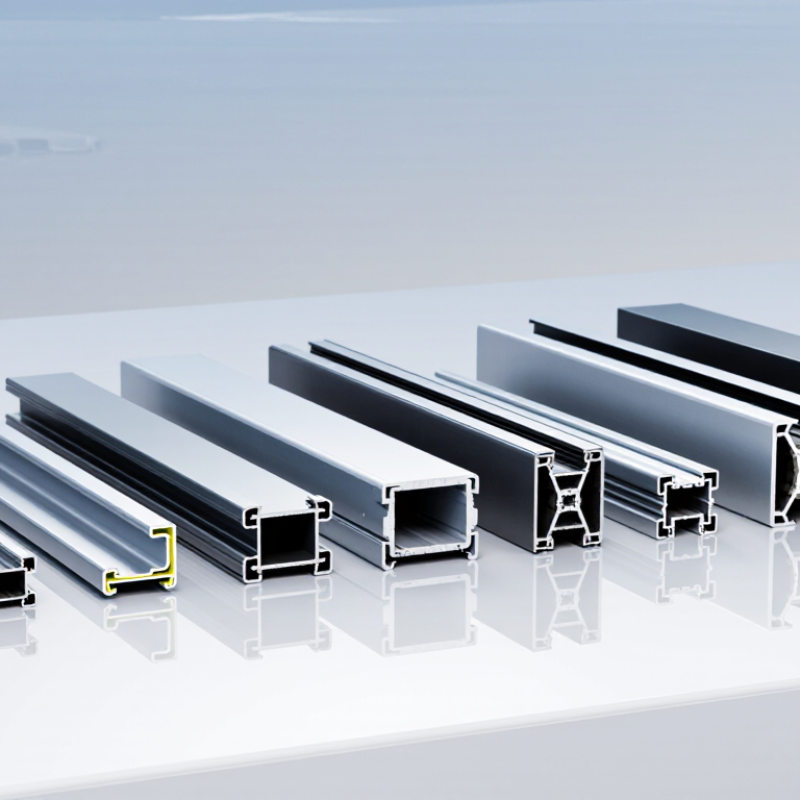
Construction profiles are easier to compare by job than by shape alone. The International Aluminium Institute’s Aluminium for Building and Construction briefing identifies buildings as a major aluminium end-use, accounting for roughly one-quarter of global demand. That scale makes alloy choice consequential.
Curtain-wall mullions and window or door frames commonly use 6063-T5 or T6, which suits detailed extrusion and visible finishes. Thermal-break frames add an insulating barrier between inner and outer aluminium sections. Louvers control shade and airflow; their blades often use 6063 alloy. Small details matter. Check drainage paths and coating thickness, not just the profile drawing.
For heavier loads, structural beams and handrail sections may use 6061-T6, subject to engineering checks. Solar mounting rails often use 6005A-T6 or 6063-T6, with selection shaped by span, connection design, and exposure. These seven functions—curtain wall, window and door, thermal break, louver, structural, handrail, and solar rail—are useful buying categories, but not fixed alloy rules. Alloy labels alone can mislead; temper, wall thickness, finish, and fabrication all affect performance. I would verify load tables against the actual support spacing, since catalog examples rarely match every project.

