10 Best Industrial Printing Systems for Global Buyers
Industrial Printing Systems are becoming strategic assets, not merely production equipment. They now support packaging, labels, textiles, electronics, signage, and customized industrial parts. Smithers’ The Future of Digital Print to 2029 identifies continued value growth in digital print, driven by shorter runs, variable data, and faster product changes. Grand View Research also reports strong expansion in the global digital printing market, supported by automation and demand for personalized output. The figures differ because each report uses different market boundaries. Data can disagree.
For global buyers, the “best” system depends on substrate range, print volume, resolution, ink chemistry, automation, and regional service coverage. A high-speed inkjet press may suit a beverage-label plant, while a flatbed UV printer may better serve rigid boards and industrial panels. Total cost includes printheads, curing energy, software, operator training, spare parts, and downtime. These details often matter more than the advertised speed. Not every line needs speed.
This guide evaluates ten leading Industrial Printing Systems through practical purchasing criteria. It considers throughput, color consistency, media handling, workflow integration, maintenance access, and scalability. Reference points include manufacturer specifications, independent market research, and recognized quality practices such as ISO 12647 principles for process control. Real-world performance can vary with ink, humidity, operator skill, and maintenance discipline. That limitation deserves attention. A system that performs well in one factory may disappoint in another. Buyers should validate samples, inspect service networks, and request measurable production trials before signing a global procurement contract.
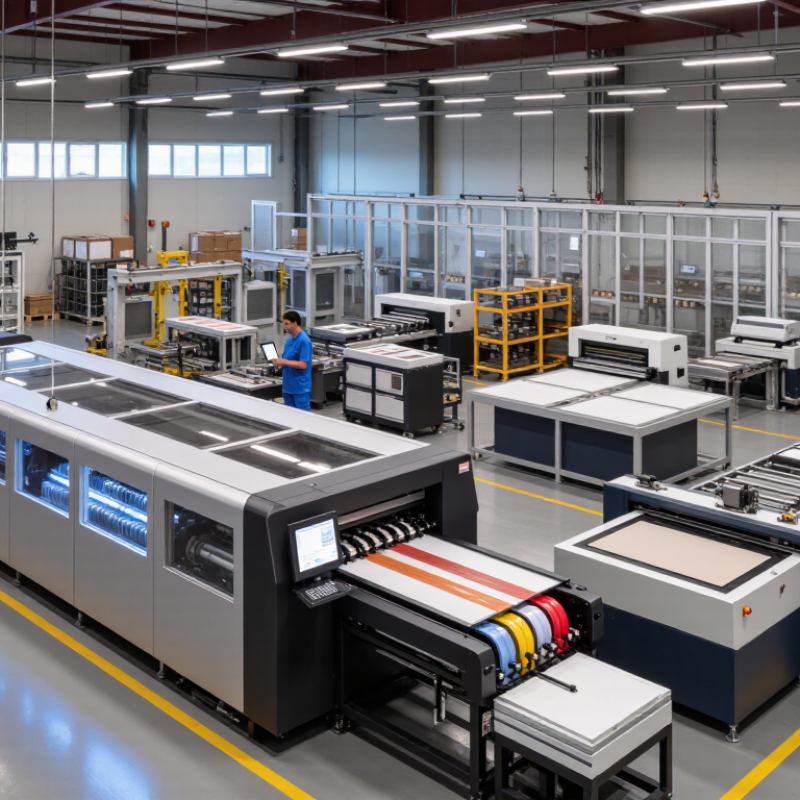
Industrial Printing Systems: Definition, Functions, and Core Technologies
Industrial printing systems are production machines designed for continuous, high-volume marking and decoration. Unlike office printers, they operate beside conveyors, cutters, fillers, and packaging equipment. Their functions include printing product codes, batch details, barcodes, graphics, and variable data. A typical system must maintain readable output while materials move quickly beneath the printhead. Speed matters.
Core technologies Core technologies include continuous inkjet, drop-on-demand inkjet, thermal transfer, laser marking, and digital toner processes. Inkjet systems can print on cartons, films, bottles, and metal surfaces with minimal contact. Thermal transfer often produces sharp labels and durable variable information. Laser systems create permanent marks without liquid ink, but they require careful material testing and controlled installation. Each method has limits.
In practical factory evaluations, engineers examine print resolution, curing behavior, drying time, substrate compatibility, and software integration. Inline cameras can detect missing characters or blurred codes before products leave the line. Operators also need clear alerts, safe access points, and simple cleaning procedures. Maintenance access is often underestimated. A system may perform well during a demonstration, yet struggle with dust, vibration, humidity, or frequent changeovers. That assumption needs testing. Buyers should record reject rates, consumable use, energy demand, and service response times under real production conditions. I would not trust speed claims without observing print quality after several continuous hours. A missed cleaning interval can quietly turn a precise process into expensive rework.
Key Selection Criteria for Global Industrial Printing Buyers
Global industrial printing buyers should assess systems against real production conditions, not attractive catalog figures. A press rated for high speed may slow sharply with textured substrates, variable data, or frequent color changes. Request a live demonstration using your own materials and files. Inspect print consistency across a full shift, including startup waste and cleaning time.
Substrate range matters. Check supported thickness, surface energy, heat sensitivity, and roll or sheet dimensions. Ask for measured tolerances, not general claims. Resolution alone can mislead. Evaluate fine text, barcodes, gradients, and registration under production lighting. A reliable evaluation also includes ink adhesion, drying performance, odor control, and operator exposure safeguards.
Total cost needs careful modeling. Include consumables, spare parts, software licenses, energy, maintenance labor, and disposal requirements. Review service response times across your operating regions. Remote support sounds useful, but unstable connectivity can make it ineffective. Request documented training, multilingual manuals, and a clear escalation process. Certification should match the destination markets and the printed product’s application.
Do not ignore workflow integration. Confirm compatibility with existing prepress tools, enterprise systems, inspection devices, and finishing equipment. During site visits, speak with operators, not only sales staff. Their comments often reveal jam frequency and awkward access points. My own preference has changed after seeing a supposedly efficient system lose hours during format changes. A controlled pilot remains valuable, though even pilots can hide seasonal humidity problems. Ask how performance is verified after installation.
Ten Leading Industrial Printing Systems and Their Main Applications
10 Best Industrial Printing Systems for Global Buyers
Ten Leading Industrial Printing Systems and Their Main Applications
Industrial buyers usually compare output, substrate range, speed, and service access. No system wins every job. Sheetfed offset suits catalogs, folding cartons, and commercial documents requiring sharp images. Web offset supports high-volume newspapers, books, and retail inserts. Flexographic presses handle labels, flexible packaging, corrugated board, and films with efficient inline finishing. Rotogravure remains valuable for long packaging runs and consistent solid colors.
Screen printing deposits heavy ink layers on textiles, glass, signs, and technical panels. Continuous-inkjet systems mark cables, cartons, bottles, and metal parts at production speed. UV inkjet prints directly onto rigid boards, plastics, wood, and industrial components, often without extended drying.
Dye-sublimation systems serve polyester fabrics, flags, interior graphics, and sportswear. Thermal-transfer equipment produces durable variable data, barcodes, and product labels. Electrophotographic toner systems support short-run books, personalized mail, labels, and prototype packaging.
Smithers’ The Future of Digital Print for Packaging to 2028 projects strong expansion in digital packaging print, driven by shorter runs and version control. Grand View Research also identifies commercial printing as a large, steadily developing global market through 2030. These figures support investment, but forecasts are not guarantees. Substrate tests still matter. Ink adhesion can fail on textured films, while heat may distort thin plastics. Buyers should inspect sample waste, color stability, operator training, and local spare-part support before selecting equipment. A fast press can become expensive when setup time, cleaning, and downtime are ignored.
Comparing Print Quality, Speed, Materials, Costs, and Automation
Industrial printing systems must be judged beyond their maximum advertised speed. Real output depends on substrate changes, drying time, operator intervention, and setup waste. Smithers forecasts the global digital print market will reach about $230.5 billion by 2027, showing strong demand for flexible production. However, higher demand does not make every system economical.
Print quality starts with resolution, ink control, registration, and curing consistency. A sharp label may still fail when fine text spreads on coated film. Liquid electrophotographic systems often deliver stable variable data, while inkjet systems can support wider material choices.
Check performance on your actual paper, plastic, metal, or corrugated board. Test samples matter more than showroom images. Sometimes, the “best” quality slows production too much.
Speed figures require careful reading. Ask for finished sheets per hour, not engine speed alone. Automated loading, inline inspection, and color calibration can reduce labor and repeated setup. The International Data Corporation has reported that automation remains a major investment priority for manufacturers facing skilled-labor shortages.
Still, automation adds maintenance costs and training demands. Total cost should include ink, heads, energy, rejected pieces, service contracts, and downtime. A 2023 PRINTING United Alliance survey found that labor and operating costs remain significant pressures for print businesses.
Materials also expose hidden limitations. One machine handles coated stock beautifully, yet struggles with heat-sensitive film. That weakness deserves a place in the purchasing decision.
Installation, Maintenance, Compliance, and Global Purchasing Considerations
Industrial printing systems demand more than impressive speed. Installation, maintenance, compliance, and purchasing decisions determine long-term value. Smithers projects the digital packaging print market could reach about US$36.9 billion by 2028. That growth increases pressure on factories to choose scalable equipment.
Installation should begin with a site survey. Check floor strength, ventilation, humidity, power quality, and network access. A commissioning checklist should record printhead alignment, curing temperature, ink handling, and operator training. Maintenance plans must include daily nozzle checks, scheduled filter replacement, and documented spare-parts availability. Predictive monitoring can reduce surprises, although it cannot replace skilled technicians. A perfect plan is unrealistic. Local service capacity still matters.
Tips: Request a written installation scope. Confirm response times, training hours, warranty limits, and spare-part stock before purchase. Ask for compliance documents, including electrical safety files, chemical safety data, emissions information, and applicable conformity declarations. ISO 9001-based quality controls can improve traceability, but certification alone does not guarantee reliable production. Smithers also identifies automation and shorter print runs as major digital-print growth drivers. Buyers should test real substrates, variable data, wash resistance, and color consistency before signing contracts. Global purchasing adds currency, customs, language, and import-tax risks. These details are easy to overlook. That is where budgets quietly fail.