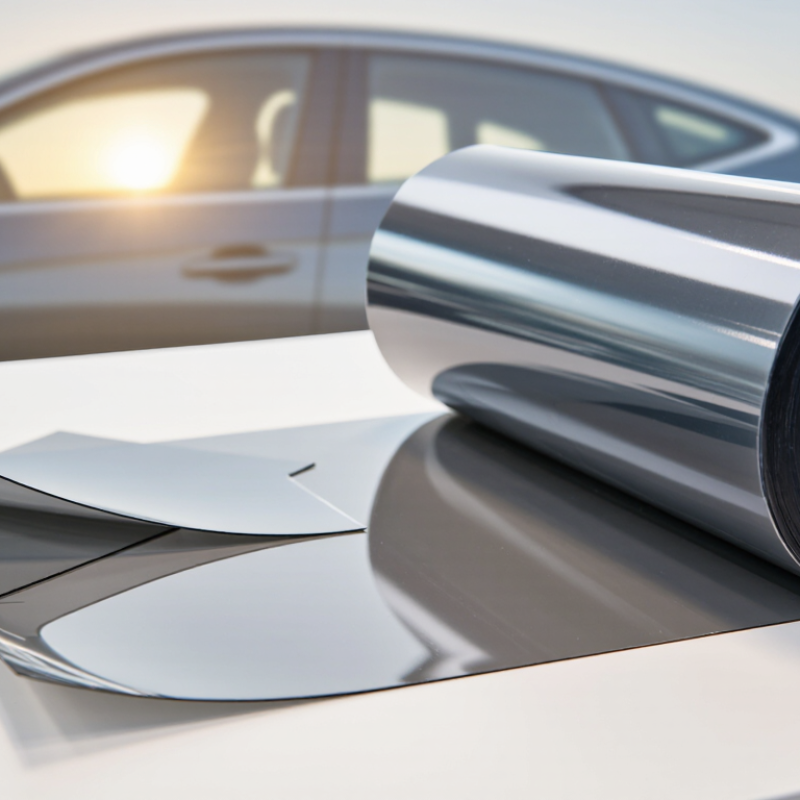
China Best Auto Tint Film Manufacturers and Suppliers
China’s Auto Tint Film sector serves buyers who need more than a dark-looking window. They need consistent optical clarity, durable adhesive, dependable heat rejection, and batch-to-batch quality. A small defect matters: haze near the driver’s sightline or an edge that begins lifting can undermine an otherwise polished installation.
Grand View Research valued the global window film market at approximately US$11.56 billion in 2023 and forecast growth through 2030. Its market covers more than automotive films, so the figure should not be read as an Auto Tint Film sales total. It does, however, show the scale of demand for film products. For buyers comparing Chinese manufacturers and suppliers, product specifications, test methods, warranty terms, and sample-roll performance deserve close attention. Ask for documented data on visible light transmission, solar-energy rejection, and ultraviolet protection. Then compare like with like.
A credible expert quotation needs a traceable source. I cannot verify a public statement from a named Auto Tint Film specialist on this topic, so I will not invent one. That restraint matters. Supplier claims can sound precise while using different test conditions. This guide will help readers assess China’s leading manufacturers and suppliers with clearer questions, practical checks, and a focus on evidence—not just catalogue promises.
Understanding Automotive Tint Film and Its Main Types
Automotive tint film is a thin layered material applied to vehicle windows. It can reduce glare, limit solar heat, and help protect interior surfaces from fading. Its performance depends on more than how dark it looks. A pale film may reject heat effectively, while a darker one may mainly change appearance. No film does everything.
Dyed film uses color layers to absorb light and can offer a simple, budget-conscious option. Over time, some dyed films may fade or change tone. Metalized film contains tiny reflective particles that help manage heat, but its metallic layer may interfere with radio or navigation signals. Carbon film avoids that metal layer and typically gives a matte finish with stable color. Ceramic film uses fine ceramic particles to block infrared heat and ultraviolet radiation while maintaining clear visibility. It often costs more. The details matter.
Hybrid films combine materials, aiming to balance price, appearance, and heat control. When comparing products, look for measured figures such as visible light transmission, infrared rejection, and ultraviolet blocking—not vague claims alone. Ask how the film may affect night visibility and whether it suits the vehicle’s windows. I would not choose by darkness alone. A darker cabin can feel private, yet make reversing on a rainy evening harder. Installation quality also matters: dust, bubbles, or uneven edges can spoil a good film. Check local window requirements before choosing.
Understanding Automotive Tint Film and Its Main Types
Typical selectable visible light transmission (VLT) ranges for common automotive tint film types.
VLT indicates the percentage of visible light that passes through the film and glass; lower values mean a darker appearance. These ranges are indicative, not standardized, and vary by product and market. VLT alone does not indicate heat rejection or determine whether a tint complies with local laws.
How Auto Tint Film Is Manufactured and Tested
Auto tint film begins with a clear polyester base, unwound into wide rolls and checked for dust or surface marks. A thin color or infrared-control layer is applied through coating or metal deposition, depending on the film design. The layers are dried, bonded, and laminated with an adhesive layer and a protective liner. Small changes in coating thickness can affect shade and heat performance. Production needs steady temperature and clean equipment.
Testing checks more than appearance. Technicians measure visible light transmission, haze, color consistency, and adhesive strength. Heat-rejection readings are taken with calibrated instruments under controlled conditions; results can vary with the test setup. Samples may also face humidity, temperature cycling, and UV exposure to reveal fading, bubbles, or edge lifting. No single test predicts every vehicle’s long-term use. That limitation deserves attention.
Tips: Ask for a dated test report and confirm which film construction was tested. Compare samples under daylight and indoor lighting. Look closely at the edges. A smooth sample is useful, but repeatable test data tells a fuller story.
China’s Automotive Tint Film Industry and Market
China’s automotive tint film market is supported by a large, active vehicle sector. The China Association of Automobile Manufacturers reported 31.28 million vehicles produced and 31.44 million sold in 2024. New-energy vehicle sales reached 12.87 million, about 40.9% of total vehicle sales. These figures point to a broadening customer base for glass films, including buyers seeking cabin comfort and interior protection. Demand is shifting.
However, vehicle sales are not the same as film sales. Public industry statistics do not provide a consistent, independently verified national figure for automotive tint film shipments. Manufacturers and suppliers should therefore treat market-size claims cautiously. CAAM’s figures indicate potential demand, not confirmed film revenue.
For buyers, performance matters more than a dramatic label. Ask for measured visible-light transmission, solar-energy rejection, UV rejection, and optical clarity, with test conditions clearly stated. A dark sample can look impressive indoors, yet perform differently under strong sunlight. Installation quality also matters: dust, edge lifting, and uneven adhesion are practical warning signs. Specifications help, but they do not replace careful testing.
Leading Auto Tint Film Manufacturers and Suppliers in China
China’s leading auto tint film manufacturers and suppliers serve buyers seeking steady production, varied film constructions, and export-ready support. Their offerings may include dyed, ceramic, and hybrid films, with different levels of visible-light transmission, heat reduction, and color stability. Ask for measured performance data, not broad claims. A useful sample check includes looking through the film at a printed grid, checking edge clarity, and noting any color shift under daylight. Short tests help.
Reliable suppliers can explain the film’s layers, adhesive type, liner handling, and recommended installation conditions. They should provide current test documentation and identify how results were measured, since figures from different methods are not always comparable. Request samples from more than one production batch when consistency matters. Also confirm roll width, packaging, lead time, and how defects are handled after delivery. These details are mundane, but they prevent costly surprises.
Factory capability alone is not enough. A responsive supplier should answer technical questions plainly and flag limits, such as reduced signal performance in certain vehicle setups or appearance changes on curved glass. No film is perfect. Some catalogs make comparisons look cleaner than real use does, so independent inspection remains worthwhile. Strong partnerships come from clear specifications, repeatable quality checks, and honest communication—not just a low quotation.
How to Evaluate Suppliers, Certifications, and Product Quality
China Best Auto Tint Film Manufacturers and Suppliers
Supplier evaluation should start with traceable evidence, not a glossy sample. A 2016 JAMA Ophthalmology study tested 29 vehicles and found average UVA blocking of 96% through windshields, but only 71% through side windows. This difference shows why buyers should request film-specific test reports, with test methods, sample details, and measured results clearly stated. Ask for visible light transmission, total solar energy rejected, UV transmission, haze, and color-stability data. Small details matter.
Check certifications carefully. ISO 9001 can support confidence in a manufacturer’s quality management system, but it does not certify a film’s performance. Confirm the certificate’s scope, validity, and issuing body. Request batch numbers, production dates, and a documented process for handling defects. For test claims, ask which recognized method was used and whether an independent laboratory conducted the test. A number without a method is weak evidence.
Inspect film under bright, angled light. Look for cloudy areas, uneven color, tiny inclusions, and edge distortion. Then compare samples from different production batches, not just the display roll. A sample can look excellent and still hide batch variation; I would not treat one showroom swatch as proof. Ask suppliers how they test adhesion and weathering, and request records rather than verbal assurances. A little skepticism helps.
China Best Auto Tint Film Manufacturers and Suppliers - How to Evaluate Suppliers, Certifications, and Product Quality
| Evaluation Dimension | What to Check | Evidence or Practical Benchmark | How to Verify |
|---|---|---|---|
| Manufacturer Capability | Confirm whether the supplier manufactures film, converts jumbo rolls, or operates as a trading company. | Ask for a process overview covering coating or film production, slitting, inspection, storage, and order fulfillment. Capabilities vary by supplier. | Review a live or recorded factory tour, production-flow documents, equipment records, and a sample batch traceability record. |
| Quality Management System | Check whether a quality-management certificate is current and applies to the relevant manufacturing site and activities. | ISO 9001 is a quality-management system standard; certification does not by itself certify tint-film performance. | Verify the certificate number, scope, issuing certification body, site address, and validity directly with the certification body or its official directory. |
| Automotive Supply-Chain Readiness | Assess documented controls for production changes, nonconforming product, corrective actions, and lot identification. | IATF 16949 is an automotive quality-management standard. It is not held by every aftermarket film supplier and should not be treated as a universal legal requirement. | Request the current certificate and confirm its scope and site. If the supplier is not certified, review equivalent documented controls and customer-audit records. |
| Environmental Management | Check whether environmental procedures and certificates cover the actual production location. | ISO 14001 addresses environmental management systems; it does not verify product safety or optical performance. | Validate the certificate’s site, scope, validity period, and certification body. Request relevant environmental permits where applicable. |
| Visible Light Transmittance (VLT) | Compare the stated VLT for each shade and confirm the measurement method and glass setup. | VLT is reported as a percentage. No single tint level is legal everywhere; permitted limits depend on jurisdiction, window position, and vehicle rules. | Request a test report identifying the film, test method, instrument, and glass substrate. Check local vehicle-window regulations before selecting a shade. |
| Solar Performance | Review total solar energy rejected (TSER), solar transmittance, reflectance, and the stated testing conditions. | TSER depends on the film and glazing combination. Results are not reliably comparable unless the same measurement method and glass configuration are used. | Compare reports using the same standard, substrate, and calculation basis. Ask for independent laboratory results for the exact product and shade. |
| UV and Infrared Claims | Check the wavelength range and measurement basis behind UV-rejection and infrared-rejection claims. | “IR rejection” can refer to different wavelength bands or test methods; a single percentage without that information is difficult to compare. | Request spectral-transmittance data or a laboratory report showing the wavelength range, test setup, and whether the result applies to film alone or film on glass. |
| Film Construction and Thickness | Confirm the film type, layer construction, nominal thickness, and whether thickness includes the adhesive and release liner. | Products may use dyed, metallized, ceramic, or multilayer constructions. Thickness should be stated with a unit and a clearly defined measurement basis. | Compare technical data sheets with measured samples and supplier specifications. Ask the supplier to explain any variation between product series. |
| Optical Clarity and Appearance | Assess haze, color consistency, distortion, visible defects, and appearance across the roll. | Request defined inspection limits and acceptance criteria rather than relying only on subjective descriptions such as “clear” or “premium.” | Inspect samples under consistent lighting and viewing conditions. For bulk orders, agree on a reference sample and incoming-inspection procedure. |
| Adhesion and Durability Testing | Review evidence for adhesive performance, weathering, color stability, and resistance to bubbling or delamination. | Test outcomes depend on the method, substrate, exposure conditions, and duration; a test result should identify these details. | Request reports for the exact product and batch where available. Check whether tests were conducted by an independent laboratory and retain samples for comparison. |
| Product Traceability and Consistency | Check whether each roll or production lot can be linked to specifications, inspection results, and production records. | A useful quality record identifies product code, lot or batch number, production date, and inspection status. | Ask for a sample certificate of analysis or inspection record and verify that the same identifiers appear on labels, packing lists, and order documents. |
| Warranty and After-Sales Support | Review written coverage, exclusions, claim procedures, and responsibility for replacement or remedy. | Warranty duration and coverage vary by product, installation, market, and supplier. No standard duration applies to all tint films. | Obtain the full warranty terms before ordering. Confirm how claims are submitted, what evidence is required, and whether the warranty is valid in the destination market. |
| Compliance and Safety Documentation | Identify the legal requirements for the destination market and distinguish film performance from glazing compliance. | Automotive glazing rules vary by country and vehicle window. A film certificate alone does not establish that a filmed window complies with local law. | Request product-specific documentation and have the importer or installer check applicable local regulations, labeling rules, and vehicle inspection requirements. |
| Sampling and Pre-Shipment Inspection | Agree on sample approval, order specifications, packaging, and inspection criteria before mass production. | Written specifications should include product code, shade, dimensions, tolerances, packaging, and agreed test or inspection requirements. | Approve and retain a signed reference sample. Use an agreed inspection plan and document any deviations before shipment. |