





How to Choose Squeezable Lip Gloss Tubes for Your Brand
Beauty packaging is a small object with a very public job. It must protect the formula, dispense it cleanly, and feel right in a customer’s hand. McKinsey’s 2023 beauty-market analysis projected the global beauty industry could reach about $580 billion by 2027, with roughly 6% annual growth. That forecast signals opportunity, not guaranteed demand for any one package. A squeeze tube still has to earn its place.
Choosing Squeezable Lip Gloss Tubes starts with the formula and how people will use it. A thick gloss may need a wider opening than a thin, slippery oil. The shoulder should release product without leaving a stubborn pocket behind. Cap fit matters, too. A loose closure can turn a tidy handbag into a sticky one. Small details count.
Then test the actual package. Check squeeze force, leakage, dispensing consistency, and compatibility between the formula and tube materials. Ask suppliers for specifications and samples, and assess print quality under store lighting—not just on a screen. Grand designs can disappoint. A tube may look premium online yet feel flimsy in the hand, and that is easy to overlook.
This guide covers materials, capacity, applicators, closures, decoration, and supplier checks. It also considers sustainability claims carefully: lighter packaging may reduce material use, but its real impact depends on the full design and disposal context. There is no perfect tube. The better choice balances product protection, user experience, cost, and brand fit—and confirms those trade-offs through testing.
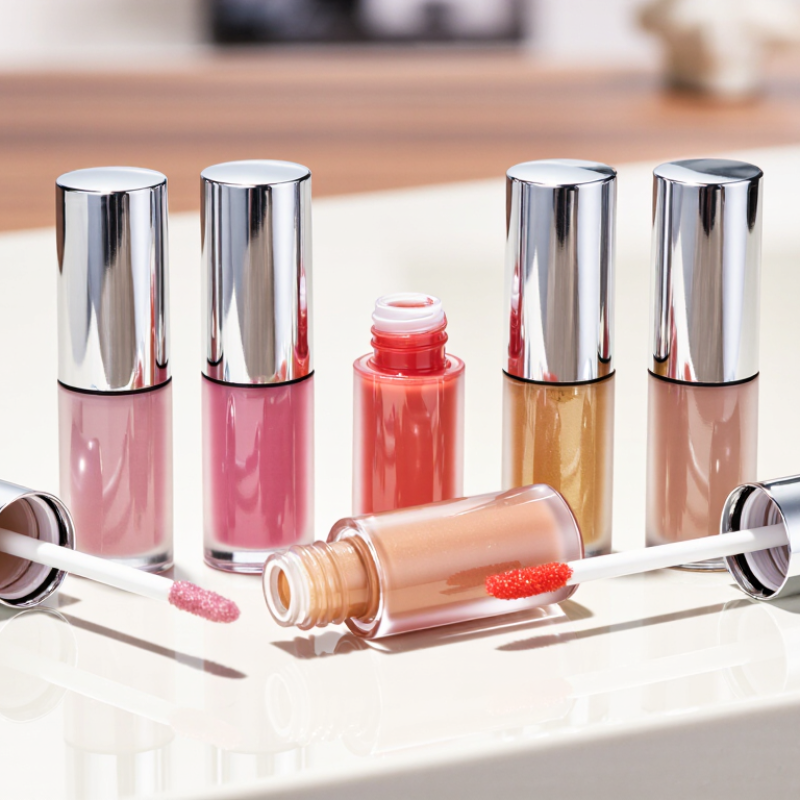
Define Your Brand’s Product and Packaging Requirements
Define the product before choosing a squeezable lip gloss tube. Set the fill volume, formula viscosity, target price, and intended use, such as a small handbag-friendly gloss or a larger home-use product. A thick, glitter-filled formula may need a wider opening than a thin gloss. Test how easily it dispenses, whether the applicator picks up enough product, and whether the cap stays clean after repeated use. Small details matter. Grand View Research’s 2024 Cosmetics Packaging Market report estimated the global market at USD 34.3 billion in 2023 and projected 5.7% annual growth from 2024 to 2030. That scale signals competition, but it does not tell you which tube suits your formula.
Specify packaging needs with measurable criteria: tube capacity, material, tube wall thickness, cap style, applicator shape, and decoration method. Request samples filled with your actual formula, then check leakage, squeezing effort, residue around the nozzle, and changes after transport or temperature exposure. A glossy render can hide a poor fit. McKinsey’s 2023 packaging survey covered 11,000 consumers across 11 countries, making it a useful reminder to ask whether recyclability and material choices matter to your intended customers. Treat those preferences as a question to validate, not a substitute for local customer research. Some trade-offs remain: a soft tube may dispense comfortably but crease easily, while a firm tube can feel harder to control.
Compare Tube Materials, Sizes, and Shapes
A squeezable lip gloss tube should match the formula, not just the shelf display. Flexible polyethylene bodies are easy to press and widely used, while laminated structures can offer a stronger barrier against air and oil migration. The trade-off is recycling: mixed layers may be harder to process than a simpler, single-material package. Check compatibility with the actual gloss, including changes in scent, color, or texture during storage. A small sample can look perfect and still behave differently after weeks of contact.
Size changes how the product feels to use. A 5–8 ml tube suits a compact bag or trial format; larger volumes need a body that remains comfortable to squeeze near empty. Round tubes roll easily, while flat or oval profiles sit more steadily on a counter. Shape matters. Consider the outlet, too: a narrow nozzle gives controlled application, while a slanted tip can spread gloss directly across the lips. The cap should close securely without requiring a hard twist. Ask for filled samples, then test them with wet hands and one-handed use. There is no perfect combination. A sleek shape may waste space in a carton, and a softer tube can crease sooner than expected. That part is easy to overlook.
Choose an Applicator and Dispensing Mechanism
Choose the applicator by matching it to the gloss’s texture and the way customers apply it. A flocked doe-foot can spread a smooth, even layer, while a slanted tip supports direct application and suits a more targeted feel. For thicker formulas, test whether product moves through the opening without excessive squeezing. Small details matter. A wide orifice may seem convenient, but it can release too much gloss in one squeeze.
The dispensing mechanism shapes both control and cleanliness. Compare nozzle size, tube flexibility, and closure fit using the actual formula, not an empty sample tube. Check the first squeeze, repeated dispensing, and whether product leaks around the cap after storage.
Smithers’ report, The Future of Global Packaging to 2028, valued the worldwide packaging market at about US$1.1 trillion in 2023. That broad figure is not specific to lip gloss, but it reflects packaging’s significant role in product delivery. I would not treat a single test as proof: temperature, filling level, and user pressure can change the result. Record the dose per squeeze and test with several users; their handling may expose a flaw that bench testing misses.
Evaluate Decoration Options and Brand Visibility
Decoration can make a squeezable lip gloss tube recognizable from a crowded display. An Ipsos survey for the Paper and Packaging Board found that 72% of consumers said packaging design could influence their purchase decisions. That figure covers packaging broadly, not lip gloss specifically, but it signals why print quality deserves attention. Keep the shade name and key product details readable on the curved tube. Small type can disappear when the package is held at arm’s length. Test it in real lighting.
Screen printing can create a direct, durable look, while pressure-sensitive labels offer more room for color and product information. Foil accents may add contrast, but too much shine can make fine text harder to read. Ask suppliers for samples using the actual tube material, then squeeze and rub them. Look for cracking, ink transfer, or distorted lettering. A flat proof is not enough. That part is easy to overlook. The tube’s curve, gloss level, and filled shape can all change how artwork appears. I would avoid choosing decoration from a digital mockup alone; it can look convincing and still mislead.
How to Choose Squeezable Lip Gloss Tubes for Your Brand
Evaluate decoration options for visual impact, design flexibility, and production practicality.
Scores use a 1–5 directional rating, where 5 is more favorable for the listed criterion; they are a practical comparison, not measured market data. Screen printing can suit bold, direct graphics, while labels offer flexibility for changing artwork. Hot stamping adds a metallic accent, and offset printing can support detailed designs. Results depend on tube material, shape, order quantity, and supplier capabilities—review production samples before choosing.
Check Supplier Quality, Safety, and Production Capabilities
A squeezable tube must feel controlled, not flimsy. Grand View Research estimated the global cosmetic packaging market at USD 34.8 billion in 2023. That scale makes supplier capacity important, but a large factory is not proof of consistent quality. Request recent inspection records, batch traceability, and clear defect limits.
Test filled tubes with your actual gloss formula. Check leakage around the shoulder and cap, then assess squeeze force, nozzle flow, and closure fit. Ask how the supplier tests compatibility, temperature changes, and transport handling. A polished sample can still hide a weak seam. Small details matter. A documented quality system, such as ISO 9001 practices, and cosmetic GMP procedures aligned with ISO 22716 can help make controls visible.
Production claims need evidence, too. Review line capacity, minimum order quantities, tooling ownership, lead times, and backup plans for material delays. Ask for pilot-run results and the method used to track rejects; a quoted capacity may describe ideal conditions, not your order. Request written change-control procedures for resin, color, or component substitutions. I would not rely on a single sample approval—it is convenient, but it leaves too much to chance. Keep approved samples and inspection criteria for comparison during production.
How to Choose Squeezable Lip Gloss Tubes for Your Brand - Check Supplier Quality, Safety, and Production Capabilities
| Evaluation Area | What to Check | Evidence to Request | How to Evaluate |
|---|---|---|---|
| Tube Material | Confirm the tube body, shoulder, cap, applicator, and any internal components are identified by material and construction. | Material specifications, component drawings, and declarations for any recycled or bio-based content. | Compare the documented construction with the approved sample and product requirements. Do not assume that a material is suitable based on its name alone. |
| Product Compatibility | Check compatibility with the actual lip gloss formula, including its oils, pigments, fragrance, and other ingredients. | Compatibility-test plan and results for the proposed formula and packaging configuration. | Agree on storage conditions, duration, inspection points, and acceptance criteria before testing. Look for changes such as leakage, swelling, cracking, discoloration, odor, or impaired dispensing. |
| Leakage and Closure | Assess the seal between the tube, shoulder, closure, and applicator or dispensing opening. | Leak-test procedure, sample size, test conditions, and recorded results. | Evaluate samples in the intended filled configuration and orientation. Set pass/fail limits for leakage with the supplier rather than relying on an unspecified “leak-proof” claim. |
| Dimensions and Capacity | Verify nominal fill volume, usable product capacity, tube dimensions, opening size, and closure fit. | Dimensioned drawings, tolerances, capacity data, and inspection records. | Check measured samples against the agreed drawing and confirm that the package works with the filling process and target fill quantity. |
| Dispensing Performance | Check squeeze force, product flow, applicator feel, and the amount dispensed during use. | Prototype samples and, where available, dispensing-test method and results. | Test with the intended formula at relevant use and storage conditions. Assess whether the product dispenses consistently without excessive force, clogging, or uncontrolled discharge. |
| Packaging Safety Information | Review information relevant to the materials and intended markets, including applicable chemical restrictions and packaging requirements. | Material declarations, applicable compliance statements, and supporting test reports where relevant. | Check that documents cover the specific components and markets in scope. A general certificate should not be treated as proof that every component or finished package complies. |
| Color and Decoration | Confirm color consistency, print or label durability, and the placement and legibility of artwork. | Approved color standard, decorated samples, artwork proof, and inspection criteria. | Approve a physical sample and define how color, registration, rub resistance, and cosmetic appearance will be checked in production. |
| Quality Control | Understand incoming-material checks, in-process inspections, final inspection, defect classification, and traceability. | Quality procedures, inspection records, defect criteria, and lot or batch traceability examples. | Confirm that inspection methods and acceptance limits are agreed before the order. Ask how nonconforming products and corrective actions are documented. |
| Production Capability | Assess whether the supplier can make the required tube format, decoration, assembly, and order quantity consistently. | Process overview, available equipment or subcontracting details, production samples, and capacity information for the requested schedule. | Confirm which operations are performed in-house, which are outsourced, and how changes to materials, tooling, or production sites are controlled. |
| Sampling and Tooling | Clarify sample availability, tooling ownership, tooling costs, and the approval process for custom designs. | Sample plan, tooling quotation, ownership terms, and written sample-approval records. | Approve the final specification and production-representative sample before mass production. Record any agreed deviations in writing. |
| Order Terms and Lead Time | Review minimum order quantity, quoted lead time, payment terms, and how delivery dates are confirmed. | Written quotation, production schedule, and order terms for the specific specification. | Compare quotations on the same basis, including decoration, packaging, tooling, freight, and any inspection costs. Treat lead times as order-specific, not universal. |
| Change Management | Check how the supplier handles changes to material sources, components, manufacturing locations, and processes. | Documented change-notification procedure and sample change-control records. | Agree which changes require advance notice, evaluation, or renewed approval before affected production is released. |
