





How to Choose the Best Capsule Machine in 2026
Choosing the best Capsule Machine in 2026 means matching the machine to your daily routine, not chasing the longest feature list. Do you make one espresso before work, or several drinks for a household? That small detail changes which capacity, controls, and cleaning features matter most.
The National Coffee Association’s 2024 National Coffee Data Trends report found that 67% of U.S. adults had coffee in the past day. This is a measure of coffee drinking, not capsule-machine sales. Still, it shows why convenience and consistent results deserve attention. A machine that heats quickly and makes a repeatable cup can be useful on a rushed morning. But convenience has a trade-off: capsule prices and availability vary, and some systems limit your choice of coffee.
Compare the cost per cup, capsule compatibility, water-tank size, footprint, and descaling process before buying. Check whether the machine supports the drink sizes you actually use; a compact model may not suit a tall travel mug. Look for clear warranty terms and manufacturer guidance on cleaning. The details matter. A low purchase price can feel less attractive when capsules are costly or hard to find. I may be giving convenience too much weight here: taste, repairability, and waste also deserve a place in the decision. The strongest choice is the one whose real-world costs and practical limits you understand before it reaches your counter.
Understanding Capsule Machines and Their Main Types
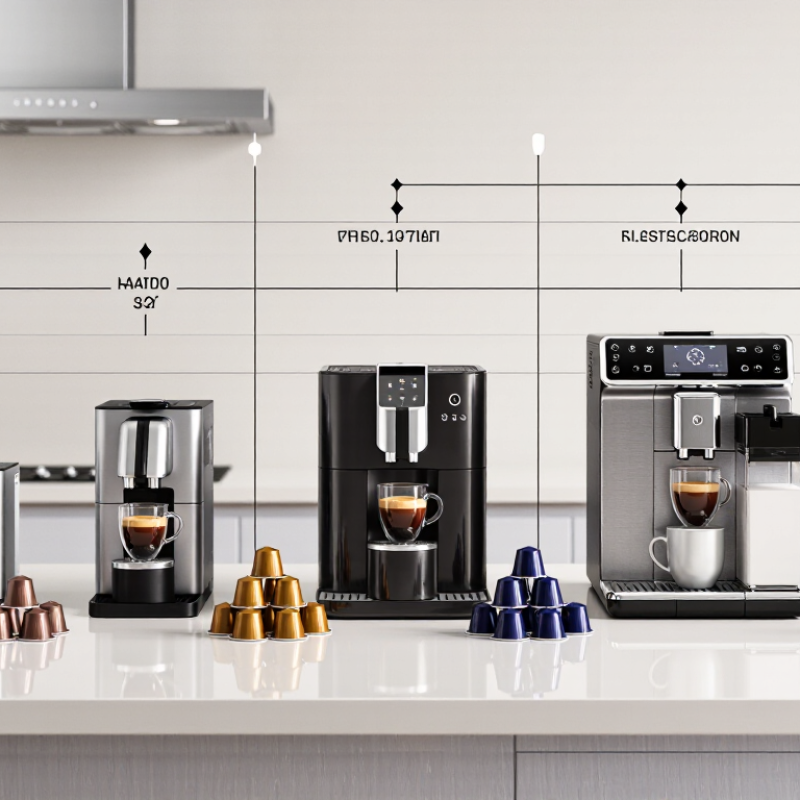
Capsule machines brew measured portions by forcing hot water through a sealed pod. Their main differences are how they heat water, control brewing, and handle milk. Basic models use one or two buttons for espresso or a longer cup. They suit small kitchens and quick routines. Check the cup clearance before buying; a tall travel mug may not fit beneath the spout. Simple details matter.
Other types add automatic milk frothing, separate steam wands, or settings for several drink sizes. Integrated frothers are convenient, but they need regular rinsing, especially around narrow milk passages. Some machines accept only one capsule format, while multi-compatible models offer more choice. Compatibility can change what drinks and capsule sizes are available, so check the packaging details rather than relying on appearance. A capsule may look right and still not fit.
For a practical comparison, note warm-up time, water-tank capacity, drip-tray space, and cleaning steps. A removable tank is easier to fill at a crowded sink. Noise matters too, particularly in a quiet morning kitchen. Fancy settings are not always useful. I would weigh daily ease and capsule availability more heavily than a long list of drink presets, though that preference may not suit every household.
How to Choose the Best Capsule Machine in 2026 – Understanding Capsule Machines and Their Main Types
| Machine type | How it works | Typical production scale | Common capsule compatibility | Best suited for | Key advantages and considerations |
|---|---|---|---|---|---|
| Manual capsule filler | An operator separates capsule caps and bodies, loads them into a filling plate, adds material, and closes the capsules by hand or with a simple press. | Small batches; output depends heavily on the operator, capsule size, and filling material. | Usually supports selected hard-shell capsule sizes through interchangeable plates. Check the tooling for gelatin or HPMC compatibility. | Product development, laboratory work, sampling, and low-volume production. | Low equipment complexity and straightforward operation. It requires substantial hands-on labor and generally offers less consistent output than automated systems. |
| Semi-automatic capsule filler | The machine automates selected steps, such as capsule orientation, separation, dosing, or closing, while an operator loads materials and oversees the process. | Small to medium production runs; actual throughput varies by machine design, staffing, and product properties. | Often configured for particular capsule sizes and shell materials; size changes may require replacement parts or setup adjustments. | Growing operations that need more output than manual filling without a fully automated line. | Reduces repetitive manual work and can improve process consistency. Operators still need to monitor feeding, dosing, and capsule closure. |
| Fully automatic capsule filler | Integrated mechanisms orient and separate empty capsules, meter the fill, close the shells, and discharge filled capsules with limited routine operator intervention. | Medium to high production volumes; capacity is model-specific and depends on capsule size, dosing system, material flow, and operating conditions. | Uses size-specific tooling. Available configurations may handle different hard-shell capsule sizes and shell materials, subject to machine specifications. | Established production facilities with repeatable, sustained manufacturing needs. | Supports higher throughput and repeatable operation. Requires more investment, setup, maintenance, and process controls than manual or semi-automatic equipment. |
| Capsule polishing and inspection equipment | Processes already-filled capsules to remove loose powder from their exterior and, in some systems, check for selected visible defects. | Usually selected to match the output of the filling line; capacity depends on the equipment and inspection method. | Generally designed for specified capsule dimensions and production-line arrangements. | Facilities that need a downstream capsule-cleaning or inspection step. | Can improve capsule surface cleanliness and support visual quality checks. It does not replace validated in-process controls or a complete quality system. |
Selection note: There is no universal output rate for each machine category. Confirm the rated capacity under your intended operating conditions, capsule size and shell material, fill formulation, dosing accuracy requirements, changeover needs, cleaning procedure, and applicable regulatory requirements before purchasing.

