





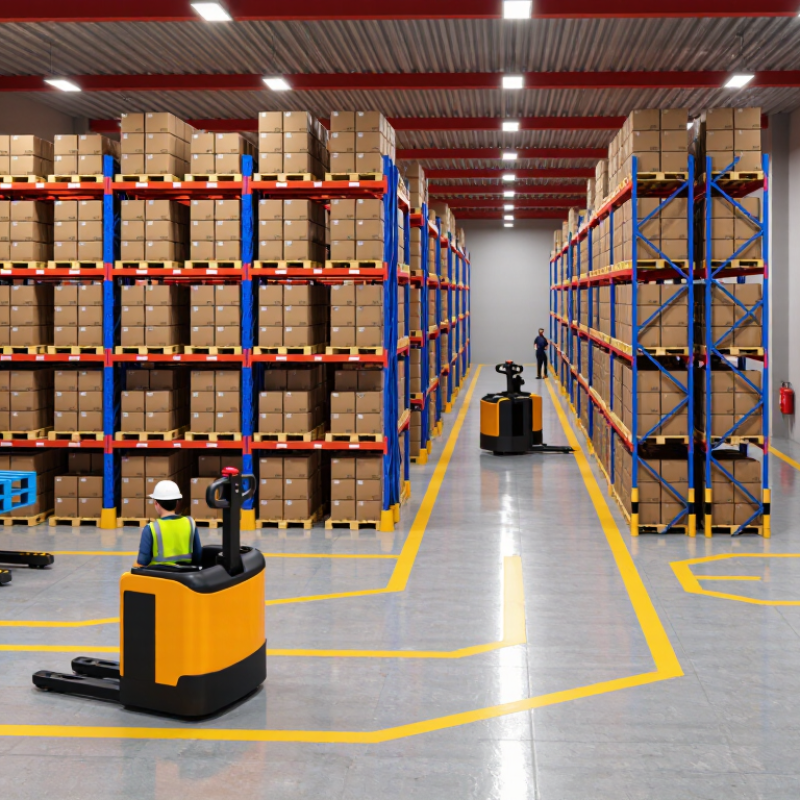
An electric stacker lift is a battery-powered material-handling truck designed to raise palletized loads and place them on racks. Unlike a counterbalanced forklift, many stackers use a tall mast and compact chassis, with the load carried ahead of the drive wheels. Operators may walk behind the unit or ride on a platform, depending on its design. The right description is practical: it lifts, transports, and positions pallets in tighter spaces.
Look closely at the mast, forks, power source, and operator controls. Rated capacity changes with lift height and load center, so a 1,000-kilogram rating does not mean every load can be raised to maximum height. A pallet’s weight, dimensions, and stability all matter. In a narrow aisle, even a small turning-radius difference can affect daily workflow. That detail is easy to miss.
OSHA’s Powered Industrial Trucks eTool reports about 85 fatalities and 34,900 serious injuries annually involving forklifts. Those figures cover powered industrial trucks broadly, not stackers alone, but they underline why operator training and clear visibility matter. MHI’s 2024 Annual Industry Report also notes that 55% of surveyed supply-chain leaders planned to increase technology investment. Automation is growing, yet a simple walk-behind stacker can still fit a small warehouse well. Specs help, but watching it handle a real pallet tells more.

