




What is Laboratory Tools and Their Importance in Scientific Research?
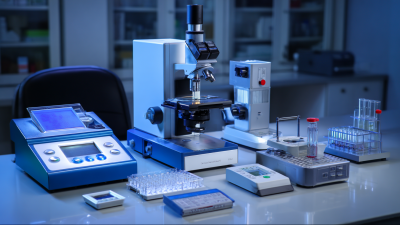
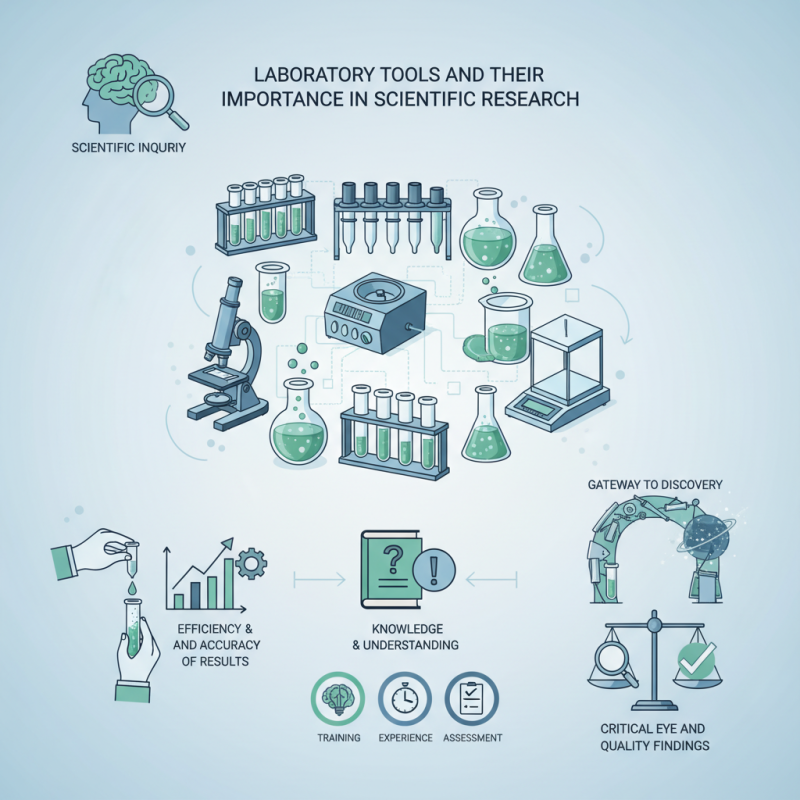
Laboratory Tools play a crucial role in scientific research. They are essential for conducting experiments and gathering data. These tools range from basic items to advanced instruments. Each tool has its specific function, impacting the accuracy of results. Scientists depend on tools like microscopes, pipettes, and centrifuges to perform tasks that require precision.
Choosing the right Laboratory Tools can enhance the efficiency of research projects. However, improper use can lead to errors. Understanding each tool's capabilities is vital. The reliability of results hinges on this knowledge. Researchers must continually assess their proficiency with these instruments. This ongoing evaluation fosters a culture of improvement and accountability.
Ultimately, employing effective Laboratory Tools is key to advancing scientific inquiry. While these instruments are powerful, they also present challenges. Balancing usage with a critical eye ensures quality findings. Recognizing the importance of training and experience will guide future research endeavors. Laboratory Tools are not just instruments; they are gateways to discovery.
Definition of Laboratory Tools and Equipment in Scientific Research
Laboratory tools and equipment play a vital role in scientific research. They facilitate experiments, enabling researchers to gather data effectively. According to a 2022 report by the Global Laboratory Equipment Market, the industry is projected to exceed $50 billion by 2025. This growth underscores the continuous need for advanced tools in labs worldwide.
Defining laboratory tools, they consist of instruments, apparatus, and machines that assist in scientific experiments. Items like microscopes, centrifuges, and pipettes are fundamental for analysis. The accuracy these tools provide can significantly impact research outcomes. For instance, precision balances can measure mass within 0.0001 grams. This level of detail is crucial for experiments requiring strict adherence to measurements. However, reliance on such precision poses challenges. A small error can lead to skewed results, emphasizing the need for tool maintenance and calibration.
The importance of laboratory equipment extends beyond precision. It also encompasses safety and efficiency. Items such as fume hoods and personal protective equipment safeguard researchers. However, without proper training, these tools may not be used effectively. Recent data also suggests that 30% of lab accidents stem from equipment misuse. Hence, a balance between high-tech tools and adequate training is essential for optimal research conditions.
What is Laboratory Tools and Their Importance in Scientific Research?
| Tool/Equipment | Purpose | Importance | Examples |
|---|---|---|---|
| Microscope | To magnify small samples for observation | Essential for cellular and microbiological studies | Light Microscope, Electron Microscope |
| Centrifuge | To separate components of a liquid based on density | Vital for preparing samples for analysis | Microcentrifuge, Ultracentrifuge |
| Pipette | To measure and transfer small volumes of liquid | Crucial for precise sample preparation | Graduated Pipette, Micropipette |
| Spectrophotometer | To measure the intensity of light at different wavelengths | Important for quantifying concentrations of substances | UV-Vis Spectrophotometer, FTIR |
| Incubator | To maintain a controlled environment for cell culture | Essential for biological research and application | CO2 Incubator, BOD Incubator |
Types of Laboratory Tools: Categories and Examples
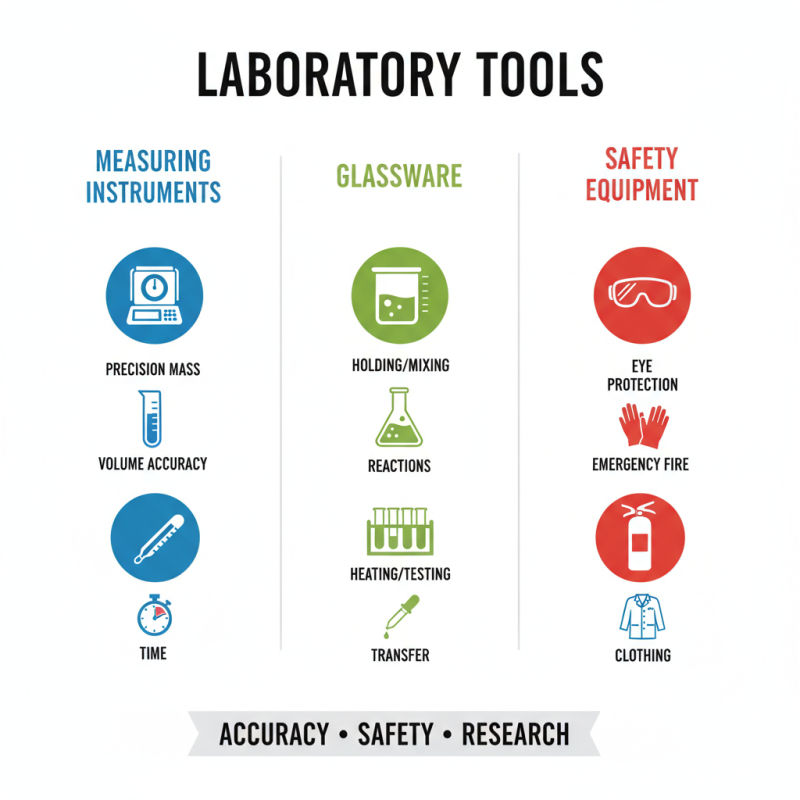
Laboratory tools are fundamental to scientific research. They enable precise measurements and experiments. Various categories of these tools support different scientific fields. Common categories include measuring instruments, glassware, and safety equipment. Each category plays a vital role in ensuring accurate results and safe working conditions.
Measuring instruments, like pipettes and balances, help in quantifying substances with precision. According to a recent report by the National Institute of Standards and Technology (NIST), accurate measurements are crucial for reproducibility in experiments. Glassware, such as beakers and flasks, allows for safe and effective mixing of chemicals. These tools must be made of durable materials to handle various reactions.
Tip: Always inspect glassware for cracks or defects before use. Safety equipment, like goggles and gloves, protects researchers from hazards. The use of proper safety gear reduces accident rates significantly, contributing to a safer lab environment. Despite advancements, researchers sometimes overlook the importance of tool maintenance. Keeping tools calibrated ensures reliability. Your research outcomes depend on the precision of your laboratory tools.
Functionality of Laboratory Tools in Experimental Procedures
Laboratory tools play a crucial role in scientific research, enabling precise experimentation and accurate data collection. Each tool serves a specific function, facilitating various experimental procedures. For instance, pipettes allow scientists to measure and transfer liquids with accuracy. This precision is vital in experiments where slight variations can lead to different outcomes. The importance of proper handling cannot be overstated; even minor mistakes can compromise results.
In addition to pipettes, other tools like centrifuges and spectrophotometers enhance the efficiency of experiments. Centrifuges separate substances based on density, while spectrophotometers analyze light absorption. These devices streamline complex procedures and save valuable time. However, researchers must regularly calibrate and maintain these tools for reliable results. Neglecting this can lead to inaccurate conclusions, impacting the entire study.
Moreover, using laboratory tools requires knowledge and practice. New researchers may struggle initially but can improve through experience. Observing seasoned professionals can provide invaluable insights into proper techniques. Continuous learning and adaptation are necessary, as scientific inquiries often lead to unexpected challenges. Understanding the functionality of laboratory tools is therefore not just about their use; it also involves fostering critical thinking and problem-solving skills.
Importance of Laboratory Tools for Data Accuracy and Reliability
Laboratory tools are essential for ensuring data accuracy and reliability in scientific research. Studies show that up to 80% of laboratory errors stem from improper tool use or inadequate calibration. Accurate measurements are critical, as even minor discrepancies can lead to significant variations in results.
For instance, precision balances and pipettes form the backbone of quantitative analysis. A recent report from the American Chemical Society highlights that laboratories using calibrated tools reduce error rates by 40%. This improvement directly impacts data reliability. Such accuracy is vital in drug development, where the efficacy of a medication can hinge on a mere fraction of a milligram.
Quality control and maintenance of laboratory equipment cannot be overstated. Regular checks and validations are necessary practices that help maintain the integrity of results. Surprisingly, many labs overlook this routine requirement. This neglect can lead to misinterpretations of experimental findings. Researchers must prioritize the reliability of their tools; otherwise, their conclusions may lack validity. The importance of laboratory tools cannot be understated.
Advancements in Laboratory Tools and Their Impact on Research Outcomes
Advancements in laboratory tools have dramatically transformed scientific research methods. The introduction of automated systems enhances efficiency. These systems reduce human error and increase reproducibility of experiments. According to a report by the National Institutes of Health, replacing manual processes with automation can improve throughput by up to 50%. This shift is crucial in high-stakes research, where precision matters most.
Digital tools like lab management software also empower researchers. They streamline data collection and organization, simplifying the analysis process. A study from Nature Biotechnology emphasizes that digital records reduce time spent on data handling by 30%. However, reliance on technology raises concerns about data privacy and security. Researchers must prioritize safeguarding sensitive information while harnessing technological benefits.
Despite these advancements, challenges remain. New tools can be costly, creating barriers for smaller labs. Training staff on cutting-edge technology takes time and effort. Additionally, some researchers may resist adopting new methods, preferring traditional techniques. This resistance can hinder progress, emphasizing the need for ongoing education and support in the scientific community. Balancing innovation with practicality is essential for future developments.
Advancements in Laboratory Tools and Their Impact on Research Outcomes
This bar chart illustrates the advancements in laboratory tools over the past decade and their corresponding impact on research outcomes, measured by the percentage increase in efficiency and accuracy in scientific studies.
Related Posts
-
Understanding Best Lab Instruments Specifications and How to Choose the Right One
-
Maximizing Laboratory Efficiency with Cutting Edge Lab Instruments for Enhanced Research Productivity
-
Laboratory Instrumentation Showdown: Choosing the Right Tools for Your Research Needs
-
Essential Laboratory Tools for Accurate Scientific Experimentation Techniques
-
Top 10 Essential Lab Equipment Every Scientist Needs?
-
Top 10 Scientific And Laboratory Equipment You Need for Your Lab?