





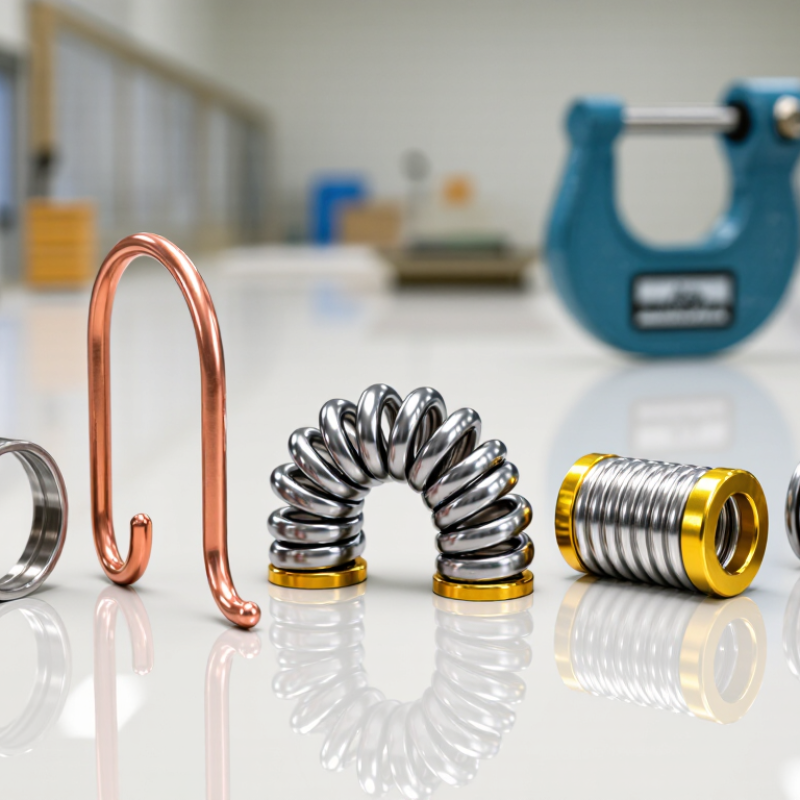
Top Stamped Contact Spring Types for Global Buyers
Material selection begins with the spring’s electrical and mechanical workload. Copper alloys provide strong conductivity and reliable forming for many stamped contact springs. Stainless steel offers better corrosion resistance and stable spring force, but its conductivity is lower. Carbon steel can deliver high strength, although it usually needs a protective finish. Dome, cantilever, and multi-finger designs each distribute force differently. The right choice depends on stroke, contact pressure, current, and available space.
Surface finish controls more than appearance. Tin supports economical solderability and works well in many low-to-moderate current applications. Silver handles higher current and can reduce contact resistance, though tarnishing must be considered. Gold offers excellent resistance to oxidation and fretting in low-level signal contacts. Nickel often serves as a barrier layer beneath another finish. Layer thickness matters. Too thin, and wear exposes the base metal; too thick, and forming may become less predictable.
Engineers should match the finish to the mating material, insertion cycles, humidity, and storage conditions. A clean laboratory test may not represent a dusty assembly line. Contact force can also decline after repeated deflection, especially when the alloy or heat treatment is poorly matched. A common mistake is choosing gold for every signal application without checking wear and budget. That approach feels safe, but it is not always technically justified. Prototype testing should include current cycling, salt or humidity exposure, and real mating hardware. Some specifications look complete yet leave the critical wear mechanism untested.

