





How to Test a High Pressure Safety Switch
A High Pressure Safety Switch is a protective control, not just another component in a refrigeration or air-conditioning system. Testing it helps confirm that it responds when pressure reaches its specified limit. A switch that appears intact may still be poorly adjusted, electrically faulty, or affected by damaged wiring. Small details matter. A reading on a gauge is useful, but it does not prove the switch will operate correctly.
Refrigeration educator John Tomczyk’s practical approach can be summed up this way: “Verify the control under the conditions it was designed to protect.” This is a paraphrase, not a verbatim quotation. It captures why testing should follow the equipment manufacturer’s procedure and the switch’s rated specifications. A qualified technician can inspect the wiring, use suitable test equipment, and compare the measured response with the documented setpoint. Do not guess.
This guide explains how to test a High Pressure Safety Switch while keeping the process methodical and safety-focused. It will cover visual checks, electrical testing, interpreting results, and common causes of misleading readings. For example, a loose terminal can imitate a failed switch, while an incorrect meter setting can distort a test. The exact procedure varies by system. That point is easy to overlook. Never defeat or bypass a safety control to keep equipment running; stop and investigate any unexpected result. Even a careful test has limits, and recognizing them is part of sound troubleshooting.
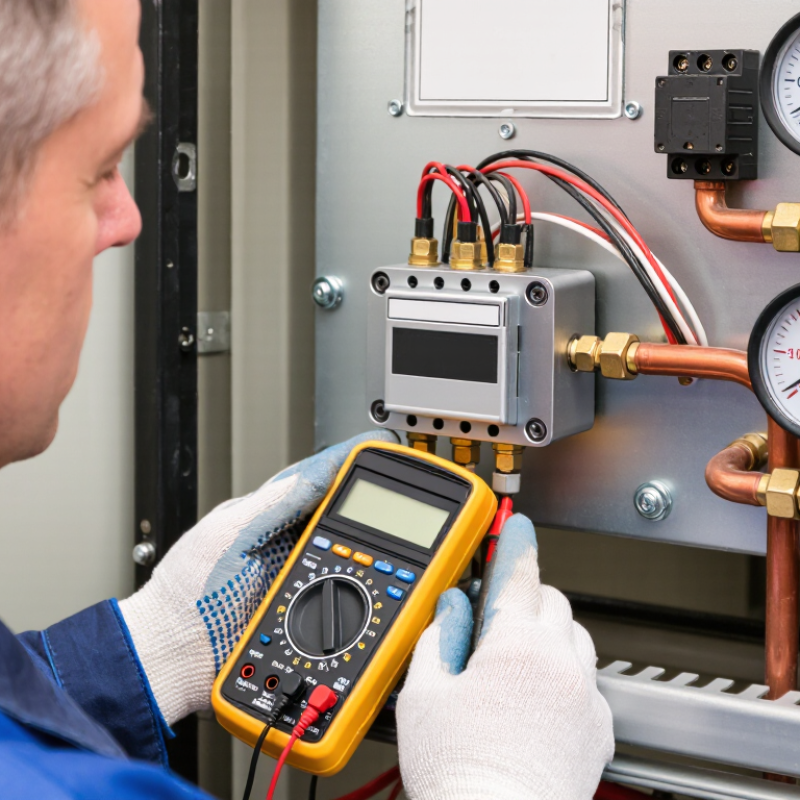
Understand the Switch’s Function and Pressure Rating
A high-pressure safety switch monitors system pressure and opens a control circuit when pressure exceeds its trip point. That interrupts operation before pressure climbs further. Its pressure rating is not automatically the correct trip setting. Check the equipment documentation and switch label for the intended setpoint, maximum working pressure, and reset differential. These values serve different purposes. Do not guess.
For a basic check, isolate electrical power and verify the circuit state with a suitable meter. Then use an approved, calibrated pressure source and gauge to raise pressure gradually under controlled conditions. Record the pressure at which the contacts change state, then compare it with the specified range and tolerance. A switch that trips late, fails to reset, or gives inconsistent readings may be faulty. Small differences matter. Never exceed the switch’s rated limit, and do not bypass it to keep equipment running. If the label is worn or the expected setting is unclear, stop and confirm the correct specification with qualified service personnel. A faded label can make an otherwise simple test less certain.
High-Pressure Safety Switch: Setpoint and Pressure Rating
Illustrative bench-test example (psi): the switch opened at 298 psi against a 300 psi setpoint. Compare measured operation with the device manufacturer’s specified tolerance; the pressure rating is a limit, not a test target.
Use a calibrated pressure source and follow the manufacturer’s test procedure. Never exceed the switch’s rated pressure; high-pressure testing should be performed by qualified personnel.
Gather Test Equipment and Review Safety Precautions
Before testing a high-pressure safety switch, gather a properly rated pressure gauge, a digital multimeter, insulated probes, and the equipment’s service documentation. Wear eye protection and suitable work gloves. Keep the work area dry, clear, and well lit. Identify the power source and disconnect it before inspecting wiring. Verify isolation with a meter; never rely on a control panel indicator alone. Pressure systems can retain energy after shutdown, so follow the equipment’s approved depressurization procedure. If you are not trained to work on that system, stop and call a qualified technician.
Tips: Check the gauge range before connecting it. Inspect test leads for cracks or exposed wire. Keep tools away from moving parts. Never bypass the safety switch to keep equipment running.
Review the switch’s rated pressure and the manufacturer’s test instructions before taking measurements. Use only fittings designed for the system’s pressure, and secure them carefully to prevent leaks. Do not loosen a connection while the system is pressurized. A small leak can become dangerous quickly. I would also pause if the readings seem inconsistent; that may signal a setup problem, not a faulty switch. Record the equipment condition, pressure readings, and meter results. Clear notes help a qualified person assess the next step without guesswork.
Disconnect Power and Locate the Switch
Before testing a high-pressure safety switch, isolate every electrical supply to the equipment. Turn off the disconnect and follow your site’s lockout/tagout procedure. Then verify the circuit is de-energized with a properly rated meter; check the meter on a known live source before and after testing. A dark display is not proof. Capacitors may also retain a charge, so follow the equipment service instructions. The U.S. Bureau of Labor Statistics recorded 145 fatal occupational injuries involving exposure to electricity in its 2022 Census of Fatal Occupational Injuries. That figure covers many kinds of work, but it underlines why a careful power check matters.
Locate the switch without loosening tubing or opening a pressure connection. In many HVAC systems, it sits on the high-pressure, discharge side near the compressor or condenser; layouts vary. Trace the small electrical wires and compare the component with the wiring diagram. Look for a compact switch body connected to a pressure port or line. Keep hands clear of hot surfaces, fan blades, and sharp cabinet edges. Power off does not mean pressure is gone. I have seen rushed inspections treat those as the same condition; they are not. If the switch or its connection is unclear, pause and consult the equipment documentation or a qualified technician before proceeding.
Measure Switch Response with a Rated Test Setup
How to Test a High Pressure Safety Switch
Measure Switch Response with a Rated Test Setup
A high-pressure safety switch should be tested with a controlled, rated setup, not by guessing from system behavior. Have a qualified technician isolate the equipment and verify that pressure is fully relieved before removing the switch. Use a regulated pressure source, a calibrated gauge, and fittings rated above the intended test pressure. Include a suitable relief device. Never exceed the lowest pressure rating in the assembly. That detail matters.
Connect the switch according to its specifications, then raise pressure slowly while watching the gauge and electrical contacts. Record the pressure where the contacts change state, and compare it with the published cutout range. If the design includes a reset point, lower pressure gradually and record that too. A multimeter can confirm contact continuity, but it does not prove the switch responds at the correct pressure. Keep hands clear of pressurized connections. Small leaks can be hard to spot. I would not treat one clean reading as proof of reliability; repeat the test, inspect the fittings, and document any inconsistent response. Depressurize the setup completely before disconnecting anything.
Interpret the Results and Restore the System Safely
After the pressure switch trips, compare its action with the equipment specifications and the pressure shown on a calibrated gauge. A typical high-pressure cutout opens its electrical contacts as pressure rises, but some designs behave differently. Check the wiring diagram before judging the result. If the contacts do not change state near the specified trip point, or reset at an unexpected pressure, stop the test and investigate. A click alone proves little.
Now restore the system with power isolated. Remove test leads, reconnect the original wires, and refit any covers or guards. Check for loose terminals, damaged insulation, and leaks around disturbed fittings. Small details matter. Confirm that pressure has returned to an acceptable range before restarting. Then restore power and observe the system during a controlled run, watching both the gauge and the switch response. Keep clear of moving parts and hot surfaces. Never leave a safety switch bypassed, even briefly during normal operation. If readings drift or the switch trips again, shut the system down and have a qualified technician inspect it. I have seen rushed resets hide the real fault; the pause is worth it.
