





7 Tips for Buying AC Condensers in Bulk?
Buying Ac Condensers in bulk can reduce unit costs, but the cheapest quotation may become expensive later. Freight damage, incorrect coil materials, and mismatched capacities can quietly erase your savings.
The International Energy Agency’s The Future of Cooling report found that space-cooling energy demand tripled between 1990 and 2016. It also projects cooling demand could more than triple again by 2050. That pressure affects equipment selection, efficiency targets, and replacement planning. The U.S. Department of Energy’s residential HVAC market research also emphasizes proper sizing and system compatibility. A condenser is not an isolated box. It must match the evaporator coil, refrigerant, controls, voltage, and installation conditions.
“Proper system design and installation are critical to achieving efficiency and comfort,” says Jim Cika, former vice president of technical services at the Air Conditioning Contractors of America. His point applies directly to bulk purchasing. Ten pallets of incompatible equipment are still ten pallets of waste.
This guide presents seven practical tips for evaluating Ac Condensers in volume. It covers model verification, seasonal efficiency, refrigerant transition planning, supplier documentation, packaging, warranty terms, and total landed cost. Look closely at the nameplate. Check the coil surface. Ask for serial-number records. Small details matter.
Not every bulk deal is a good deal. That deserves reflection. Market forecasts can guide decisions, but they cannot replace site data or experienced inspection. Regional climate, storage conditions, and installer capability may change the answer. Reliable purchasing depends on evidence, not impressive discounts alone.
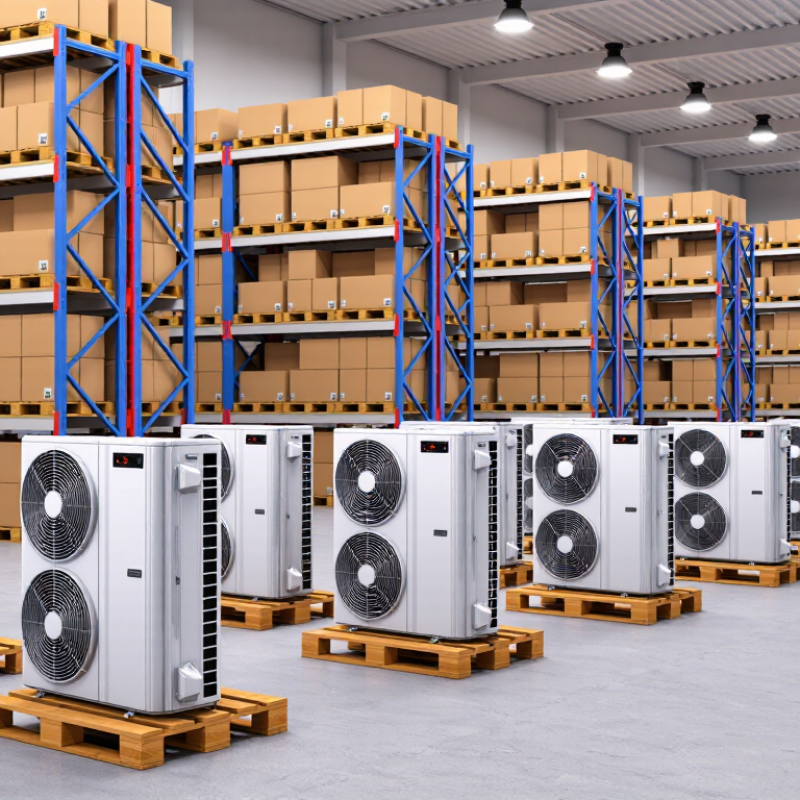
Define Cooling Requirements and Condenser Specifications
Before buying AC condensers in bulk, define the actual cooling load for each site. Room size alone is not enough. Check occupancy, sunlight, insulation, operating hours, and indoor equipment heat. The IEA’s Future of Cooling report projects that global space-cooling demand could more than triple by 2050. That makes accurate capacity planning increasingly important. Oversized condensers may cycle frequently, waste energy, and control humidity poorly. Undersized units may run continuously on hot afternoons. Neither outcome supports reliable procurement.
Record the required cooling capacity, outdoor design temperature, refrigerant type, voltage, phase, airflow, sound limit, and physical footprint. Include coil corrosion conditions, especially near saltwater or industrial emissions. Confirm the condenser’s rated performance under recognized test procedures, such as AHRI 210/240 for applicable air-conditioning equipment. The U.S. Department of Energy also emphasizes seasonal efficiency metrics rather than nominal capacity alone. Ask suppliers for certified data, wiring diagrams, installation clearances, and replacement-part availability. Small omissions become expensive across hundreds of units.
Request one or two sample condensers before approving a large shipment. Test noise, startup current, discharge temperature, and control compatibility. Measure twice. Field conditions often differ from catalog assumptions. A common mistake is selecting identical units for buildings with different heat loads. That choice simplifies inventory, but it can reduce operating efficiency. Recheck the calculations with a qualified HVAC engineer, and document every specification in the purchase contract.
7 Tips for Buying AC Condensers in Bulk? - Define Cooling Requirements and Condenser Specifications
| No. | Buying Tip | Key Data to Define | Practical Specification Guidance | Bulk-Order Check | Priority |
|---|---|---|---|---|---|
| 1 | Calculate the Required Cooling Capacity | Heat load, indoor design temperature, outdoor design temperature, operating hours, and safety margin. | Specify capacity in kW or BTU/h. Use the project heat-load calculation rather than room size alone. A common engineering allowance is approximately 5–10%, subject to local design practice. | Group units by capacity class, such as 3.5 kW, 5.0 kW, or 7.0 kW, and verify that the condenser capacity matches the indoor unit and system design. | Critical |
| 2 | Match the Refrigerant and System Type | Refrigerant type, charge requirements, compressor arrangement, and whether the system is fixed-speed or inverter-driven. | Common refrigerants include R-32 and R-410A in many modern comfort-cooling systems. R-32 is mildly flammable and requires equipment designed and certified for A2L refrigerants. | Do not mix refrigerants, lubricants, or incompatible components. Request refrigerant labeling, safety documentation, and installation requirements for every model group. | Critical |
| 3 | Confirm Ambient Operating Conditions | Outdoor temperature range, altitude, humidity, coastal exposure, dust level, and required cooling performance during peak conditions. | Standard comfort-air-conditioning ratings are often based on approximately 35°C outdoor air temperature, while high-ambient equipment may be designed for higher conditions. Always compare the manufacturer's rating conditions. | Specify high-ambient operation, corrosion protection, or enhanced filtration where the installation site is hot, dusty, industrial, or near saltwater. | High |
| 4 | Check Electrical Compatibility | Rated voltage, phase, frequency, maximum running current, starting current, breaker size, and electrical connection method. | Typical commercial supplies include 230 V single-phase or 400 V three-phase at 50 Hz, but electrical standards vary by market. The nameplate must match the installation supply. | Separate the order by voltage, phase, and frequency. Ask for nameplate drawings and electrical data before approving production. | Critical |
| 5 | Evaluate Efficiency and Seasonal Performance | Cooling efficiency, seasonal efficiency, rated capacity, part-load performance, and applicable regional energy requirements. | Compare efficiency using the applicable metric, such as EER, COP, SEER, or SEER2. These metrics use different test methods and should not be compared directly without checking the standard. | Require certified test data, efficiency labels, and compliance documents for the destination market. Avoid relying only on nominal cooling capacity. | High |
| 6 | Verify Physical and Installation Specifications | Unit dimensions, shipping weight, service clearance, pipe diameter, maximum line length, elevation difference, drainage, and mounting method. | Copper line sizes depend on system capacity and design; common residential sizes include approximately 6.35 mm liquid lines and 9.52–12.70 mm suction lines, but the equipment manual is the controlling reference. | Confirm pallet dimensions, container loading quantity, lifting points, service access, and whether brackets, vibration isolators, or other accessories are included. | Medium |
| 7 | Set Quality, Compliance, and Delivery Controls | Applicable safety standards, factory testing, warranty terms, spare parts, packaging, lead time, inspection procedure, and acceptable defect rate. | Request pressure testing, electrical safety testing, leakage inspection, performance records, serial-number traceability, and documentation for the destination market. | Use a pre-shipment inspection plan covering sample size, cosmetic condition, nameplate accuracy, accessories, packaging integrity, and quantity verification before final payment. | High |

