





China Top 10 Industrial Cable Manufacturers
China’s industrial sector depends on reliable cable systems, from factory control rooms to ports, mines, and power projects. Industrial Cables carry energy, signals, and data through demanding environments. Their performance can affect equipment uptime, worker safety, and maintenance costs. Choosing a manufacturer, therefore, takes more than comparing catalog prices.
This guide introduces ten notable industrial cable manufacturers in China. It considers product range, production capabilities, quality systems, application experience, and export support. These are useful starting points, not a universal ranking. A supplier suited to a robotics line may not fit a high-temperature plant or offshore installation. Details matter. Buyers should verify current certifications, test reports, material specifications, delivery terms, and project references directly with each company. A polished website is not proof of consistent production quality.
Cable selection also depends on installation conditions. Think about voltage, conductor material, insulation, shielding, bending cycles, temperature, moisture, and chemical exposure. For a moving cable carrier, ask about flex-life testing and the conditions used during the test. A cable that looks robust in a sample may behave differently after years beside hot machinery. That gap deserves attention. This overview cannot replace engineering review or factory audits, and company information can change over time. Still, it can help procurement teams build a shortlist and ask better questions before requesting quotations. The most dependable choice is usually the one that matches real operating conditions, with evidence to support important claims. Some comparisons remain imperfect. That is worth admitting. It makes careful verification more important.
Industrial Cable Manufacturing in China: Scope and Main Product Types
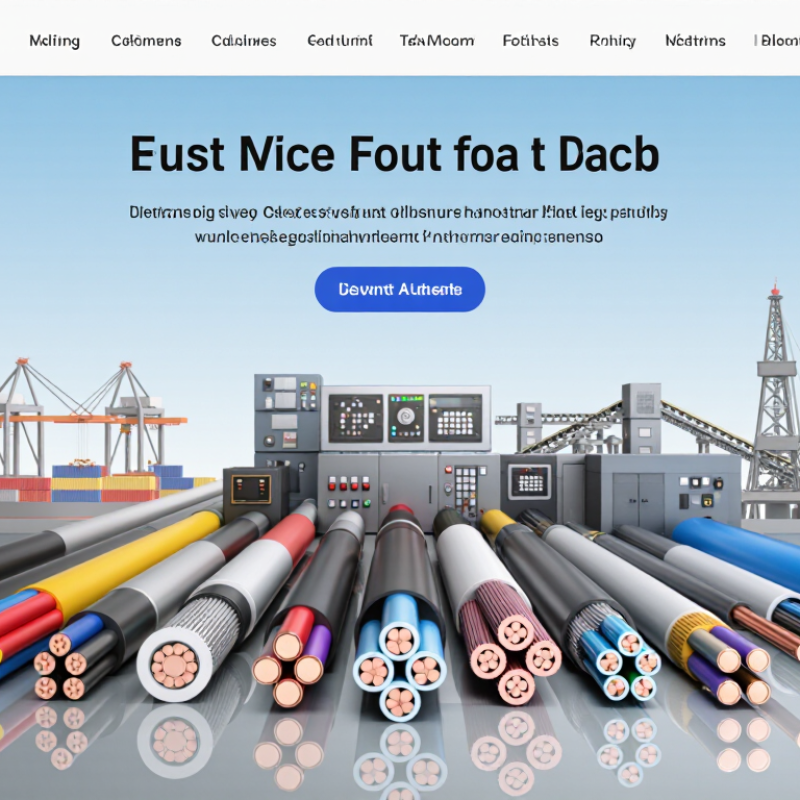
China’s industrial cable manufacturing scope extends well beyond power transmission. It includes medium- and low-voltage power cables, control and instrumentation cables, flexible cables for moving equipment, and communication cables used in factories. Specialized products may add heat, oil, abrasion, or flame resistance, depending on the installation environment. The categories can overlap. A cable feeding a production line may also need shielding against electrical interference.
Demand is tied to electrification and factory investment, but national electricity use is only a broad indicator. The China Electricity Council’s 2023 power-industry statistics report recorded 9.22 trillion kWh of electricity consumption, up 6.7% year over year. That scale points to extensive power infrastructure, not a direct measure of cable sales. The International Energy Agency’s 2023 report, Electricity Grids and Secure Energy Transitions, says annual global grid investment needs to rise from about USD 300 billion to more than USD 600 billion by 2030. Industrial buyers therefore assess conductor material, voltage rating, insulation, shielding, and installation conditions—not just the product label. Small details matter. A cable that works in a fixed tray may fail on a moving machine; selection still requires careful review of operating conditions.
Criteria for Selecting Leading Chinese Industrial Cable Manufacturers
Selecting leading Chinese industrial cable manufacturers starts with the operating conditions, not the catalogue. Define voltage, current, ambient temperature, chemical exposure, bending radius, and installation method. Then compare conductor material and cross-section, insulation, sheath, and stated service life against the application. The International Energy Agency’s 2023 report, Electricity Grids and Secure Energy Transitions, says annual grid investment needs to exceed US$600 billion by 2030, roughly twice current levels. That figure signals growing infrastructure demands; it does not verify any individual factory’s quality. Paper is not performance.
Ask for traceable material records, routine test results, and relevant type-test reports from qualified laboratories. Check whether tests cover the exact cable construction and rating, not merely a similar product. A factory audit should examine conductor drawing, insulation extrusion, marking, and batch segregation. Small details matter. Request a sample and inspect dimensions, print legibility, and packaging before approving production. Also assess engineering support, production capacity, lead times, and how the supplier handles nonconforming batches. A successful audit cannot guarantee an on-time shipment, and that uncomfortable gap deserves a contingency plan. No checklist is perfect; verify claims against the project specification and independent test evidence.
China Top 10 Industrial Cable Manufacturers – Criteria for Selecting Leading Chinese Industrial Cable Manufacturers
Supplier evaluation framework. The weights below are suggested for comparing manufacturers; they are not company-specific scores or rankings.
| No. | Evaluation Dimension | Suggested Weight | What to Check | Evidence to Request |
|---|---|---|---|---|
| 1 | Product and application fit | 15% | Confirm the manufacturer produces the required cable type, voltage class, conductor material, insulation, sheath, and operating-temperature range for the intended industrial application. | Product datasheets, construction drawings, ratings, and a written response against the project specification. |
| 2 | Standards and regulatory compliance | 15% | Check that the offered design meets the standards and market requirements specified for the project. Relevant examples include IEC 60228 for conductor classes and IEC 60502 for power cables within its stated voltage scope. | Applicable conformity documents, standard editions, declarations, and reports for the exact cable design being quoted. |
| 3 | Type testing and product verification | 12% | Assess whether the proposed construction has been tested for the required electrical, mechanical, and environmental properties. Fire-performance requirements should be matched to the project specification. | Complete test reports identifying the tested cable construction, test methods, results, date, and issuing laboratory. |
| 4 | Quality management and process control | 12% | Review controls for incoming materials, conductor processing, insulation and sheathing extrusion, in-process inspection, final testing, nonconformities, and corrective actions. | Current quality-management certificates, process-control plans, inspection records, and audit findings relevant to the production site. |
| 5 | Laboratory and routine testing capability | 10% | Verify that the factory can perform the routine and sample tests required by the applicable standard and contract, and can control calibration of test equipment. | Laboratory equipment list, calibration records, sample test certificates, and testing scope where external laboratories are used. |
| 6 | Material traceability and documentation | 10% | Check whether production batches can be linked to material records, inspection results, cable markings, reel identification, and shipment documents. | Sample batch-traceability pack, material certificates where specified, inspection and test plan, and reel schedule. |
| 7 | Engineering and customization support | 8% | Evaluate the ability to review specifications, resolve technical deviations, prepare construction details, and manage approved design changes. | Technical query responses, deviation list, controlled drawings, and documented change-approval process. |
| 8 | Production capacity and delivery planning | 7% | Compare the requested quantities, conductor sizes, cable lengths, reel dimensions, and delivery schedule with the factory’s confirmed production plan. | Order-specific lead time, capacity confirmation, production milestones, packaging plan, and shipment schedule. |
| 9 | Export readiness and logistics | 6% | Confirm the supplier can prepare the required commercial and technical documents, protect cable drums for the transport route, and coordinate shipment terms agreed in the contract. | Sample packing list, commercial invoice format, certificate documentation plan, drum and packing specifications, and proposed shipping schedule. |
| 10 | After-sales service and commercial transparency | 5% | Review response arrangements for technical questions, claims, warranty matters, and replacement or corrective-action requests. Compare quotations on the same technical and delivery basis. | Written warranty terms, claim procedure, named service contacts, itemized quotation, and stated exclusions. |
| Total suggested weight | 100% | Verify claims against documents and the specific product offered. | ||
Profiles of 10 Industrial Cable Manufacturers in China
China’s industrial cable sector serves factories, infrastructure projects, and equipment builders. These ten profiles highlight different manufacturing strengths rather than present a strict ranking. The first profile focuses on power cables for industrial distribution, where conductor size and insulation quality matter. The second covers control cables used to connect sensors, panels, and machinery. The third specializes in flexible cables for moving equipment, such as cranes and production lines. The fourth makes instrumentation cables designed to carry stable signals in electrically noisy environments. Details matter.
The fifth profile centers on fire-resistant cable production, including products designed to maintain circuit integrity under specified test conditions. The sixth covers mining cables built for demanding sites, where abrasion resistance and clear product documentation are essential. The seventh focuses on marine and offshore applications, while the eighth supplies cables for renewable-energy installations. The ninth profile represents manufacturers serving automation and robotics, with attention to bend radius and repeated movement. The tenth covers custom cable assemblies and small-batch production for specialized equipment.
Comparing manufacturers requires more than reading a product list. Buyers can review test reports, material specifications, production capacity, and sample quality. Ask how each supplier controls conductor consistency and insulation thickness. A factory’s claimed capability may not match every order. The picture is not perfectly neat, so confirm project requirements directly and check documentation before making a decision.
Key Products and Technologies Across the Manufacturers
Industrial cable manufacturers cover a broad range of needs, from low-voltage building wires to medium-voltage power cables for factories and infrastructure. Common products include copper or aluminum conductors, control cables, instrumentation cables, and flexible cables for moving equipment. The details matter. Conductor size affects current capacity, while insulation materials such as PVC and XLPE influence heat resistance and service life.
Technology varies across manufacturers. Some produce shielded cables that reduce electrical interference around sensors and control systems. Others focus on fire-resistant or low-smoke, halogen-free designs for installations where evacuation routes need extra protection. Modern extrusion lines help maintain consistent insulation thickness, but equipment alone cannot guarantee quality. Routine checks may include conductor resistance, dimensional inspection, flame tests, and electrical testing. Ask how results are recorded.
A useful comparison looks beyond product catalogs. Check whether cable constructions match the installation environment, including temperature, moisture, abrasion, and bending demands. Clear datasheets and traceable test records can make selection more dependable. Specifications can still leave gaps. A listed temperature range, for example, may not describe performance under repeated movement or chemical exposure. Discussing those conditions with a technical team helps narrow the choice, especially when several cable types appear suitable.
Industry Standards, Certifications, and Applications of Industrial Cables
Industrial cables work in places where failure is costly: beside hot motors, inside cable trays, or across moving machine arms. Their construction must match the actual conditions, not just the equipment label. Check rated voltage, conductor class, temperature range, bending radius, and exposure to oil, moisture, or abrasion. Details matter. A cable designed for fixed installation may wear quickly on a moving production line.
Standards help buyers compare performance, but each covers a specific concern. IEC 60228 defines conductor classes and resistance requirements, while IEC 60502-1 addresses certain power cables for fixed installations. Flame testing, smoke density, and halogen-acid gas emissions are assessed under separate standards, including IEC 60332, IEC 61034, and IEC 60754. Certification is not a universal guarantee. Confirm that the certificate applies to the exact cable construction, voltage rating, and target market. Heat changes everything.
Applications call for different evidence. A motor connection may need resistance to vibration and oil; a control cabinet may require clear identification and reliable signal transmission. For robotic equipment, repeated flexing deserves attention, even when a datasheet lists a generous bend radius. Inspect test reports, installation guidance, and traceable product records before specifying a cable. A checklist can still miss the real conditions on a factory floor, so reviewing the route and movement with maintenance staff is often worthwhile. I have seen neat specifications overlook one sharp tray edge.
