





Top 10 CNC Metal Parts Suppliers for Global Buyers
Choosing a supplier for Cnc Metal Parts involves more than comparing unit prices. A low quote may exclude tooling, inspection, packaging, or shipping. A polished website does not prove consistent production. Buyers need evidence.
This guide introduces ten suppliers serving international buyers and highlights practical factors for comparing them. These include machining capabilities, material options, quality controls, communication, lead times, and export experience. A useful supplier should explain how it handles drawing revisions, critical dimensions, and inspection reports. For example, a buyer ordering aluminum brackets may need clear evidence that hole positions and surface finishes match the approved drawing. Ask for sample documentation, not just broad assurances.
The list is a starting point, not a universal verdict. Supplier capabilities change, and a strong match for one project may disappoint on another. That judgment can be wrong. Part complexity, order volume, required tolerances, and destination all affect suitability. Some buyers may prioritize rapid prototypes; others need repeatable batches with traceable material records. Check current capabilities directly, clarify requirements in writing, and compare quotations on the same specifications. A careful review cannot remove every risk, but it can reveal unanswered questions before production begins.
What CNC Metal Parts Suppliers Do and Which Industries They Serve
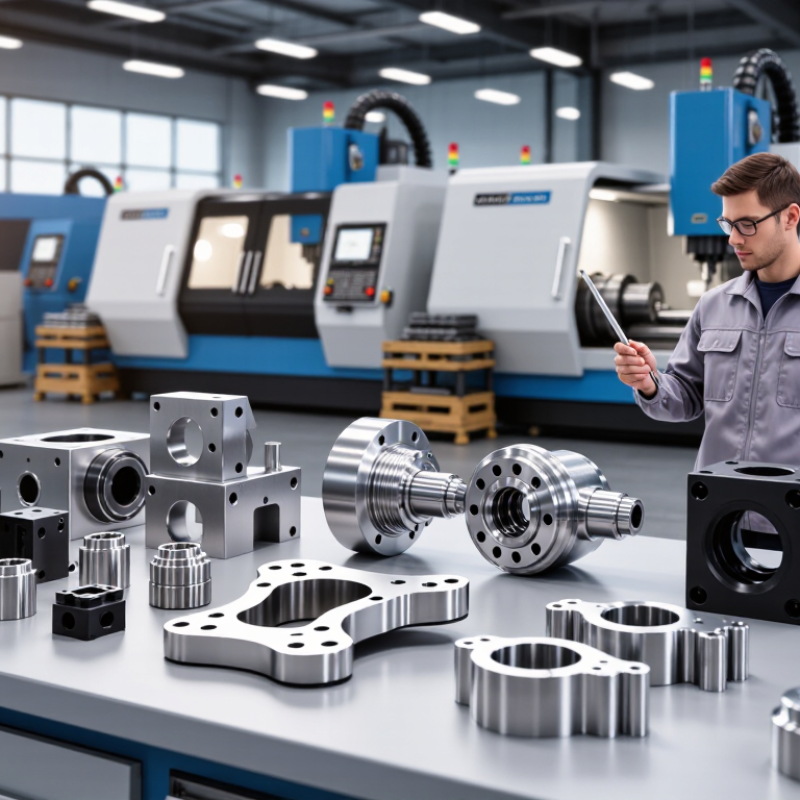
CNC metal parts suppliers convert engineering drawings into finished components through computer-controlled milling, turning, drilling, and related operations. They may work with aluminum, stainless steel, brass, or other specified metals. A buyer typically shares drawings, material requirements, tolerances, and expected quantities. The supplier then reviews manufacturability, selects suitable processes, and produces parts for inspection. Small details matter. A sharp edge, an off-center hole, or a poorly specified tolerance can affect assembly.
These suppliers serve industries that need repeatable, accurately machined parts. Automotive manufacturers may source brackets, shafts, and housings. Medical equipment makers often need small, carefully finished components. Aerospace and electronics businesses use machined parts for structural fittings, enclosures, and heat-management assemblies. Industrial equipment companies order gears, valves, and machine components. Requirements vary widely; a shop suited to large batches may not be ideal for a handful of prototypes.
For global buyers, useful supplier discussions go beyond price. Ask how dimensions are checked, how material lots are identified, and how production changes are communicated. A drawing can look complete yet leave room for interpretation, especially around surface finish or inspection points. It is worth clarifying these before machining begins. No supplier is a perfect fit for every project, and that can be easy to overlook when deadlines are tight.
How CNC Machining Capabilities Differ Across Suppliers
CNC suppliers differ less by machine count than by the work they can repeatedly control. Ask about material grades, part size, axis configuration, and achievable tolerances. A shop milling aluminum brackets may not be equipped for thin-wall stainless housings or deep internal features. Request inspection records for a part similar to yours, not only a general capability sheet. Details matter.
Digital monitoring can help, but it is not a substitute for process discipline. McKinsey’s 2018 report, “Industry 4.0: Capturing value at scale,” described potential improvements of 30–50% in machine downtime and 10–30% in throughput. These are reported opportunities, not guaranteed results for every CNC supplier. A supplier’s actual performance depends on setup, tool wear, programming, and inspection routines.
Compare suppliers on evidence: sample first-article reports, calibration schedules, and documented responses to out-of-tolerance parts. Ask how they manage changes between prototypes and repeat orders. Fast quoting is useful. Stable production is more useful. One caveat: a very tight tolerance may add cost without improving how the part works. Buyers should confirm which dimensions truly need close control, then check whether the supplier measures them consistently.
Criteria for Comparing CNC Metal Parts Suppliers Worldwide
Comparing CNC metal parts suppliers worldwide starts with the part, not the sales pitch. Share the same drawing and material requirements with each supplier. Then compare quoted tolerances, machining methods, and inspection plans. Ask how they manage drawing revisions and trace material back to its mill certificate. For a sample part, check critical dimensions with suitable measuring tools, not visual inspection alone. Small details matter. A polished certificate is useful, but it does not prove that every batch receives the same checks. Request a recent inspection report and ask what happens when a measurement falls outside specification.
Capacity and communication also deserve close review. Ask about machine availability, typical lead times, and how production changes are reported. A supplier several time zones away may still work well if questions receive clear, timely answers. Check packaging plans, shipping terms, and experience protecting finished surfaces during transit. Scratches on a machined face can create rework, even when the part is dimensionally correct. Compare the full landed cost, including freight, inspection, and possible tooling charges. The lowest quote may not stay lowest. Supplier assessments can miss things, too; a short video call cannot replace a physical audit when order risk is high. Not every buyer needs the same tolerance or inspection depth, so match the checks to the part’s function and production volume.
Profiles of Ten CNC Metal Parts Suppliers for Global Buyers
These ten supplier profiles reflect different strengths buyers may encounter when sourcing CNC metal parts. A precision-focused shop handles tight tolerances and documents inspection results. A rapid-prototyping supplier turns drawings into test pieces quickly, though production capacity may be limited. A high-volume manufacturer is better suited to repeat orders and stable process controls. A specialist in aluminum parts can machine thin walls and lightweight housings with careful tool selection. Details matter.
A stainless-steel supplier should explain how it manages burrs, surface finish, and material traceability. A multi-axis machining shop can produce angled features with fewer setups, reducing alignment errors. A supplier serving several industries may offer broad experience, but buyers should confirm relevant part examples. Ask for sample inspection reports, not just claims. Not always easy.
The remaining profiles include a sheet-metal and machining partner for assemblies, a finishing-focused supplier coordinating anodizing or plating, and a regional export-oriented shop experienced with packaging and shipment planning. Compare more than quoted price: review tolerances, lead times, communication, and change-control practices. Send a clear drawing and material specification, then ask how the supplier will inspect critical dimensions. Even a capable shop can misunderstand an incomplete print; that part is on both sides.
Top 10 CNC Metal Parts Suppliers for Global Buyers
Density of 10 common CNC machining metals
Material density is one practical comparison when evaluating CNC-machined parts: it affects part weight and can help narrow material choices. Values shown are typical approximate densities; actual values vary by alloy and specification.
How to Select and Qualify a CNC Supplier for Your Project
A capable CNC supplier should understand the part, not just the drawing. Share the latest revision, material grade, critical dimensions, finish, and expected order volume. Ask how the team checks features that are hard to measure, such as a narrow internal groove or a positional tolerance. Their answer should identify the inspection method and equipment, not merely promise “high quality.” Small details matter.
Request a sample part and an inspection report before approving production. For an aluminum housing, compare bore measurements, thread condition, edge breaks, and surface finish against the drawing. Confirm material traceability and ask whether outsourced treatments are documented. A clean report helps, but it does not prove every part will match. Review how the supplier handles nonconforming parts and drawing changes, too.
Discuss capacity, lead times, packaging, and shipping responsibilities in plain terms. Ask who will notify you if a tool wears early or a production date slips. A low quote can hide assumptions about inspection, setup, or finishing, so compare the scope line by line. If possible, assess a similar completed project, while respecting client confidentiality. A checklist is useful, but it can miss awkward realities: your team may revise the design after sampling. Leave room for that conversation.
Top 10 CNC Metal Parts Suppliers for Global Buyers - How to Select and Qualify a CNC Supplier for Your Project
Use these ten qualification checks to compare CNC machining suppliers against your drawings, materials, quality requirements, and delivery needs. Standards and regulatory requirements should be confirmed for the specific product and destination market.
| No. | Qualification area | What to verify | Why it matters |
|---|---|---|---|
| 1 | Process and equipment fit | Confirm the supplier has suitable CNC milling, turning, drilling, or multi-axis capacity for the part geometry, material, dimensions, and expected production volume. Ask which operations are performed in-house and which are subcontracted. | The right process and machine envelope help avoid unnecessary setups, avoidable outsourcing, and capacity mismatches. |
| 2 | Drawing and tolerance review | Request a documented review of the latest drawing and 3D model, including critical dimensions, geometric tolerances, datums, surface finish, and inspection requirements. Ask the supplier to identify any features that need clarification. | Machining capability depends on the feature, material, setup, and measurement method. Tolerances should be agreed for the actual part rather than assumed from a general capability claim. |
| 3 | Material traceability | Check that material grades are stated on the quotation and that material certificates or test reports can be linked to the delivered batch where required. For metallic products, EN 10204 Type 3.1 inspection certificates are one commonly used documentation option. | Traceability helps verify that the supplied alloy and condition match the order and supports investigations if a material-related issue occurs. |
| 4 | Quality management system | Review the scope, validity, and issuing body of any claimed certification. ISO 9001 is a general quality management system standard; sector-specific standards such as IATF 16949, AS9100, or ISO 13485 may be relevant to particular industries. | A certificate can indicate a structured management system, but its scope should match the manufacturing site and the work being quoted. Certification alone does not guarantee part conformity. |
| 5 | Inspection and measurement | Ask for the proposed inspection plan, first-article documentation where applicable, sample inspection reports, and details of measuring equipment. Check calibration records and, when external testing is needed, whether the laboratory has relevant ISO/IEC 17025 accreditation. | The inspection method must be suitable for the drawing requirements. Calibrated equipment and clear records improve confidence in reported measurements. |
| 6 | Finishing and special processes | Confirm how deburring, heat treatment, coating, anodizing, plating, or other specified processes are controlled. For outsourced work, ask how approved providers, process specifications, and incoming inspections are managed. | Finishing and thermal processes can affect dimensions, surface properties, corrosion behavior, and final acceptance, so they should be included in the agreed manufacturing route. |
| 7 | Production controls and capacity | Discuss expected annual demand, order quantities, lead-time assumptions, machine availability, changeover planning, and the supplier's approach to nonconforming parts and corrective action. Request capacity commitments in writing for time-sensitive projects. | A capable sample process may not automatically translate to stable repeat production. Capacity and production controls should fit the buyer's forecast and delivery schedule. |
| 8 | Sample and first-article approval | Agree on sample quantity, inspection scope, acceptance criteria, and approval responsibility before serial production. For aerospace work, AS9102 is a commonly used first-article inspection standard when required by the customer or contract. | A defined approval stage provides an opportunity to confirm the manufacturing process and documentation before committing to larger production quantities. |
| 9 | Compliance and documentation | Identify applicable customer, product, and destination-market requirements, such as substance restrictions, product declarations, or industry-specific records. Specify required certificates, inspection records, labeling, and document retention in the purchase order. | Requirements such as RoHS may apply to particular products or markets; applicability should be determined for the product rather than presumed for every machined part. |
| 10 | Commercial terms and delivery | Compare quotations on the same basis: material, tooling, setup, machining, finishing, inspection, packaging, freight, payment terms, and lead time. For international shipments, state the agreed Incoterms® 2020 rule and named place in the contract. | A consistent quotation basis makes total landed cost easier to compare and clarifies which party is responsible for transport, export or import formalities, and delivery risk under the selected rule. |
