





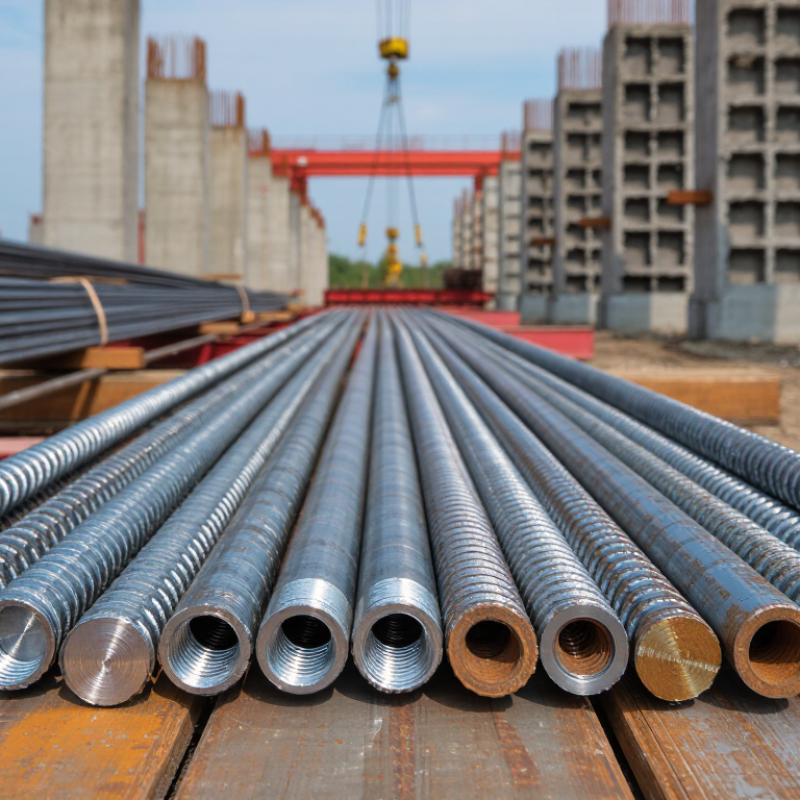
2026 Top Thread Steel Bar Types for Global Buyers
Thread steel bars differ mainly in thread geometry, strength class, and connection behavior. Coarse-thread bars provide deep engagement and tolerate dusty construction sites better. Their wide roots also reduce damage during repeated coupling.
Fine-thread bars offer more thread turns within the same length. They can improve adjustment accuracy, but their smaller thread profile needs cleaner handling.
Continuous-thread bars allow cutting and coupling at almost any point. This flexibility helps in retaining walls, foundation cages, and temporary supports.
High-strength threaded bars serve heavily loaded anchorage and reinforcement applications.
They require controlled torque, verified couplers, and clear mill certificates.
ASTM A615/A615M covers deformed carbon-steel reinforcing bars, including Grades 60, 80, and 100.
ACI 318-19 distinguishes mechanical splice performance, with stronger splice classes required where full bar strength matters.
ISO 15835 also evaluates mechanical splices through tensile and deformation tests. These requirements are not decorative paperwork.
World Steel Association reported about 1.89 billion tonnes of crude steel production in 2023. That scale supports broad availability, but availability does not guarantee suitability.
Buyers should compare yield strength, elongation, thread dimensions, coating, and coupler test results.
A practical warning: thread damage may remain invisible beneath rust or cement dust. Field inspection can miss it.
My own preference is simple: specify the connection before selecting the bar. A stronger bar with a poorly matched coupler is still a weak structural detail.

