





Why Choose a 2.5 mm Microneedling Device?
Choosing a Microneedling 2.5 Mm device can sound like a simple choice: select a deeper setting and expect more. Real skin is less predictable. A 2.5 mm needle length may be relevant in professional treatment contexts, but it is not automatically suitable for every person, skin area, or concern. Skin thickness varies. So do treatment goals, device design, and individual risk factors. The number alone tells only part of the story.
Microneedling educator and author Dr. Lance Setterfield’s guidance can be paraphrased this way: depth should match the treatment goal, not the device’s maximum setting. That distinction matters. A trained professional can assess the skin, explain expected downtime, and decide whether a particular device is appropriate. Redness and pinpoint bleeding may occur during treatment, but those details should never be treated as proof of effectiveness. More is not always better. Sometimes, caution is the smarter choice.
This article examines why people consider a 2.5 mm device, what that depth may mean, and which questions deserve attention before treatment. It also separates product claims from practical considerations, including training, device instructions, hygiene, and aftercare. These details can feel less exciting than a bold promise. They are often more useful. No device guarantees the same result for everyone, and a short article cannot replace an individual assessment. That limit matters.
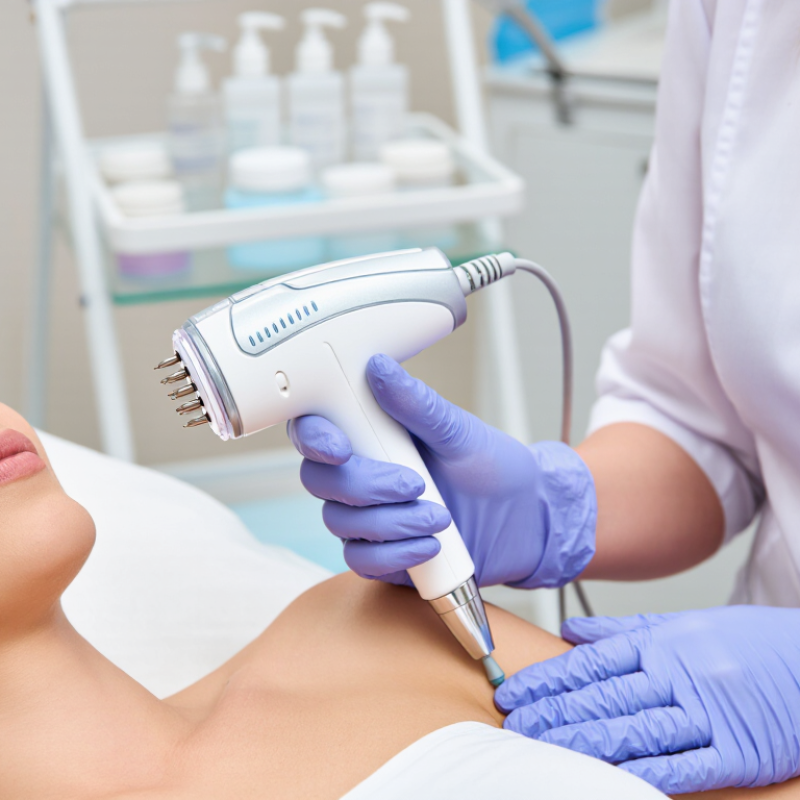
What Defines a 2.5 mm Microneedling Device?
A 2.5 mm microneedling device is identified by its maximum needle extension: the needles can project up to 2.5 millimeters from the cartridge. That number describes the device setting, not a guaranteed depth inside the skin. Pressure, skin firmness, and the treatment area can all affect how far needles actually enter. A printed setting is only part of the picture.
At this length, the device is intended for use by appropriately trained professionals, not casual home experimentation. The needles may reach deeper skin layers and can cause pinpoint bleeding, swelling, infection, pigment changes, or scarring. That distinction matters. A clinician should assess the skin, select a suitable setting, and use a sterile, single-use cartridge according to the device instructions. The same setting may not suit every area or person. Even careful technique cannot make risks disappear, and claims about results should be treated thoughtfully. Ask what the stated depth measures, how the device is calibrated, and what aftercare is expected. Details vary. A clear answer is a better sign of care than a dramatic promise.
How a 2.5 mm Needle Depth Interacts With the Skin
A 2.5 mm setting describes the needle’s maximum extension, not a guaranteed depth in every area. Skin thickness varies across the face and body, and pressure, angle, and device design can affect penetration. Skin is not uniform. A number on a dial cannot account for every difference.
At this depth, needles may pass through the outer skin and reach deeper tissue. That can trigger pinpoint bleeding and a stronger healing response than shallow treatments. It also raises the stakes: prolonged redness, infection, scarring, and changes in skin color are possible complications. The skin around the eyes, nose, and bony areas may need different handling. Depth charts can look reassuring, but they leave out real-world variation.
I would not treat 2.5 mm as a routine at-home setting. A qualified clinician can assess skin condition, treatment area, medical history, and healing risks before choosing a depth. Ask how the device is cleaned, what aftercare is needed, and which symptoms require follow-up. Redness can be expected; worsening pain, spreading warmth, or pus deserves prompt medical advice. Some uncertainty remains, even with careful assessment.
Which Skin Concerns May Require Deeper Needling?
Deeper microneedling may be considered for certain depressed acne scars or uneven texture, especially where the skin feels dense and scarred. A clinician may assess the scar’s depth, location, and skin response before choosing a needle length. A 2.5 mm setting is not automatically better; it reaches deeper tissue and can cause bleeding, prolonged redness, infection, or scarring if used inappropriately.
Depth matters. Dark marks, melasma, and fine surface lines do not necessarily call for deeper needling. In some people, excess irritation may worsen discoloration. Treatment should also be postponed or avoided when skin is inflamed, infected, prone to raised scars, or healing poorly. Those details can be easy to overlook.
A consultation should cover medical history, medicines, previous procedures, and realistic outcomes. Ask who will perform the treatment, how the device is sterilized, and what aftercare is needed. Deeper needling is generally a professional procedure, not a setting to test at home. Healing varies, and improvement may take several sessions; scars may soften without disappearing. Even with careful assessment, results are not perfectly predictable.
How 2.5 mm Devices Compare With Shallower Options
A 2.5 mm microneedling device reaches deeper than common 0.25–0.5 mm options, which mainly affect the skin’s surface. That added depth may suit selected professional treatments for depressed scars, but it also means more discomfort, pinpoint bleeding, and recovery time. Needle length does not guarantee the same depth in skin; pressure, device design, and treatment area all matter. Deeper is not automatically better.
Evidence does not show that 2.5 mm outperforms shallower settings for every concern. A clinical report by Aust and colleagues in 2008 followed 480 patients treated with 1.5 mm needles and described improvement in scar appearance. It did not establish that 2.5 mm produces better results. The FDA’s 2020 microneedling safety communication also highlights risks such as infection and skin injury, supporting careful device selection and trained clinical use. On a thin area, such as the skin near the eyes, a deeper setting may be inappropriate; scars and skin thickness vary from person to person. A shallow setting can be the more measured choice when the goal is surface-level treatment, while deeper treatment needs an individual assessment.
Why Choose a 2.5 mm Microneedling Device?
How 2.5 mm devices compare with shallower options
The chart compares nominal needle-length settings; available settings vary by device. A 2.5 mm setting is longer than the shallower options shown, but longer does not mean better or suitable for every person or area. Actual penetration can differ with device design, pressure, and skin site. Seek guidance from a qualified professional before use.
What Safety Measures and Professional Oversight Are Needed?
A 2.5 mm microneedling setting can reach beyond the skin’s surface, so it should not be treated as a routine home procedure. Depth needs to match the treatment area, skin condition, and clinical goal. A qualified, appropriately trained clinician should assess the skin and medical history beforehand. Active infection, inflamed acne, a tendency to form raised scars, or certain medicines may change whether treatment is suitable. The details matter. It is easy to focus on the needle number; that can be misleading.
Professional oversight starts before the device touches the skin. The clinician should explain likely benefits, discomfort, risks, and alternatives, then obtain informed consent. A clean treatment space, hand hygiene, and a sterile, single-use needle cartridge are essential. Treatment settings should be chosen carefully and recorded. Around delicate or thinner skin, a uniform depth may not be appropriate. No shortcuts.
Aftercare should be specific and understandable, including how to keep the skin clean and when to avoid irritating products or strong sun exposure. Mild redness can occur, but worsening pain, spreading redness, pus, or fever calls for prompt medical assessment. Even careful treatment cannot guarantee a particular result, and recovery can vary between people.
