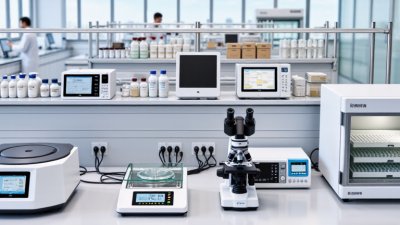





Top 10 Essential Lab Equipment Every Lab Needs
A reliable laboratory begins with equipment that supports accurate work, safe handling, and repeatable results. From a school teaching room to a professional research facility, Essential Lab Equipment shapes every stage of the workflow. A balance must measure tiny differences. A microscope must reveal clear details without distracting vibration. Even a simple pipette can influence an entire experiment.
This guide examines ten practical tools commonly used in modern laboratories. It considers their primary functions, useful features, maintenance needs, and selection limits. Glassware, centrifuges, hot plates, water baths, and safety equipment each serve different purposes. Their value depends on correct setup, regular inspection, and trained handling. Small details matter. A cracked tube or poorly calibrated balance can quietly weaken reliable findings.
The recommendations reflect established laboratory practices and the judgment of experienced technicians, educators, and facility managers. They also recognize that no single laboratory has identical needs. Budget, sample type, available space, and testing frequency can change the best choice. That part is easy to overlook. A costly instrument is not automatically the most suitable one.
Readers will find clear guidance for building or improving a dependable workspace. Each item is discussed with practical use in mind, including cleaning, storage, calibration, and safe operation. The goal is not to collect impressive machines. It is to create a laboratory where careful work remains consistent, traceable, and easier to review. Good equipment helps. Good habits decide the outcome.
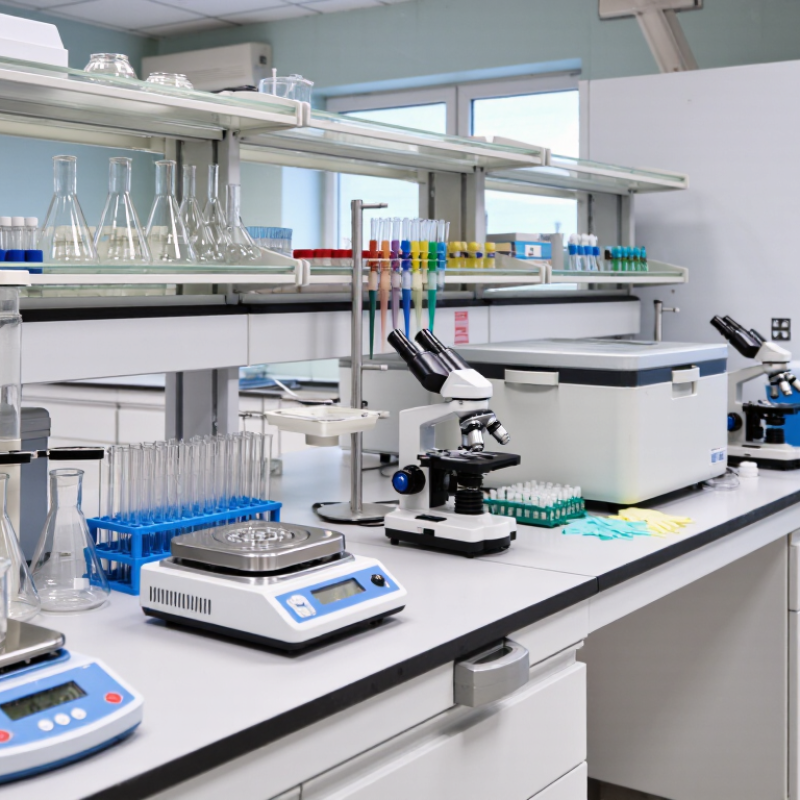
Fundamental Lab Tools for Handling, Mixing, and Measuring Samples
Graduated cylinders provide practical volume measurements for routine preparation. Volumetric flasks offer better accuracy when making standard solutions. Beakers support dissolving, pouring, and temporary holding, but they should not replace calibrated glassware.
Test tubes keep small samples organized, especially when paired with a stable rack. Vortex mixers quickly resuspend settled particles. Magnetic stirrers maintain steady mixing without constant manual movement. Watch the sample closely.
Precision Instruments for Weighing, Observing, and Recording Results
Top 10 Essential Lab Equipment Every Lab Needs
Precision begins before the experiment starts. An analytical balance detects milligram changes that ordinary scales miss. Certified weights, level indicators, and draft shields protect each reading. Digital pipettes and volumetric glassware improve liquid control. A pH meter supports reliable chemical measurements. The UNESCO Institute for Statistics reported global R&D intensity at 1.79% of GDP in 2021. That investment demands dependable data, not merely expensive instruments.
Observation requires clarity. Compound microscopes, stereomicroscopes, cameras, thermometers, and light meters reveal details invisible to unaided eyes. Centrifuges and incubators provide controlled preparation and stable conditions. I have seen a sharp image become useless when illumination settings were missing. The instrument was fine. The record was weak. Timers, calibration logs, sample labels, and environmental monitors should remain close to working equipment. The World Health Organization links reliable laboratory results with traceability, documented procedures, and trained personnel.
Recording deserves equal attention. A bound notebook or validated electronic system should preserve raw readings, units, dates, operator identity, and corrections. ISO/IEC 17025 emphasizes technically valid results and traceable measurement processes. Nature’s 2016 survey of 1,576 researchers found that more than 70% had failed to reproduce another scientist’s experiment. That finding is uncomfortable. Better records cannot repair every flawed method, but they expose uncertainty earlier. Even small omissions matter.
| No. | Equipment | Primary Category | Typical Measurement or Capacity | Key Accuracy or Resolution | Essential Laboratory Use | Result Recording Method | Important Operating Consideration |
|---|---|---|---|---|---|---|---|
| 1 | Analytical Balance | Weighing | Up to 220 g | Readability of 0.1 mg | Measures small quantities of solids and liquids for solution preparation and analytical procedures. | Digital display, balance memory, or electronic laboratory record. | Place on a stable, vibration-free surface and protect from air currents before weighing. |
| 2 | Top-Loading Balance | Weighing | Up to 5,200 g | Readability commonly from 0.01 g to 0.1 g | Rapid weighing of reagents, containers, samples, and general laboratory materials. | Digital display with manual transcription or data export where available. | Level the balance and verify calibration with certified reference weights. |
| 3 | Compound Light Microscope | Observation | Typical magnification: 40× to 1,000× | Optical resolution approximately 0.2 µm under suitable conditions | Observes cells, microorganisms, tissue sections, crystals, and prepared specimens. | Eyepiece observation, camera image, annotated drawing, or digital micrograph. | Use clean slides and lenses; immersion oil is required for many 100× objectives. |
| 4 | pH Meter | Chemical Measurement | Usually pH 0 to 14 | Resolution commonly 0.01 pH unit | Determines acidity or alkalinity of aqueous solutions, buffers, and biological samples. | Digital reading with date, sample identification, and calibration status. | Calibrate with appropriate buffer solutions and keep the electrode hydrated. |
| 5 | Spectrophotometer | Optical Analysis | Common wavelength range: 190–1,100 nm | Wavelength resolution often about 1 nm; measures absorbance and transmittance | Quantifies substances by measuring how much light a sample absorbs at selected wavelengths. | Digital absorbance or transmittance values, printed report, or exported file. | Run a blank before measurements and use clean, matched cuvettes. |
| 6 | Centrifuge | Sample Preparation | Common operating range: 500–15,000 rpm | Relative centrifugal force depends on rotor radius and speed | Separates components of suspensions, including cells, precipitates, and biological fractions. | Record rotor type, speed or relative centrifugal force, temperature, and run time. | Balance opposing tubes accurately and never open the lid before the rotor stops. |
| 7 | Laboratory Hot Plate Stirrer | Heating and Mixing | Heating commonly up to approximately 300–550°C; stirring up to 1,500 rpm | Temperature control often within approximately ±5°C, depending on setup | Heats solutions and maintains uniform mixing during dissolution, reactions, and sample preparation. | Record set temperature, actual temperature, stirring speed, and heating duration. | Use suitable heat-resistant vessels and avoid heating sealed containers. |
| 8 | Drying Oven | Controlled Heating | Typical working range: ambient temperature to 200°C | Temperature uniformity commonly within approximately ±2–5°C | Dries glassware and samples and supports controlled heating or moisture-removal procedures. | Record temperature, sample identification, start time, and exposure duration. | Allow adequate air circulation and confirm that samples are compatible with oven heating. |
| 9 | Laboratory Refrigerator | Cold Storage | Typical controlled range: 2–8°C | Temperature monitoring commonly at 0.1°C display resolution | Stores temperature-sensitive reagents, standards, biological materials, and prepared samples. | Continuous data logger, digital display, or scheduled temperature log. | Do not store volatile or flammable chemicals in a standard laboratory refrigerator. |
| 10 | Digital Timer and Temperature Logger | Recording and Monitoring | Timer range commonly up to 99 hours; temperature range depends on sensor | Temperature resolution often 0.1°C; timing resolution commonly 1 second | Tracks incubation, reaction, heating, cooling, and storage conditions for repeatable procedures. | Timestamped digital records, downloadable files, or manually completed worksheets. | Check battery status, sensor placement, and clock accuracy before critical experiments. |
Heating and Temperature-Control Equipment for Controlled Experiments
Heating and temperature-control equipment forms the quiet backbone of controlled experiments.
Dry-block heaters, laboratory ovens, water baths, incubators, and refrigerated chambers must provide stable, measurable conditions. The WHO Laboratory Biosafety Manual recommends documented monitoring and calibration for equipment affecting test conditions. That means a displayed temperature is not enough. I check the probe location, recovery time, and actual sample temperature.
Accuracy matters near critical thresholds. ISO/IEC 17025 emphasizes metrological traceability and measurement uncertainty. A chamber set to 37°C may still create colder corners near the door.
Mapping tests can reveal these gradients using several calibrated sensors. Small details matter. A loose lid, overloaded shelf, or frequent door opening can distort results. I have seen stable readings change after a single misplaced container.
Energy performance also deserves attention. The U.S. Department of Energy reports that laboratories may use five to ten times more energy per square foot than office buildings. Heating and cooling equipment contributes significantly to that demand. Programmable setpoints, insulated vessels, and scheduled maintenance can reduce waste without weakening experimental control.
Still, energy saving should never override validated temperature limits. That balance is not always obvious. Teams should record deviations, review calibration intervals, and question whether every setpoint remains scientifically necessary. Temperature logs become far more useful when they include room conditions, load changes, and operator observations.
Separation and Sterilization Devices for Reliable Laboratory Procedures
Top 10 Essential Lab Equipment Every Lab Needs
Separation and sterilization equipment protect sample quality and laboratory safety. A centrifuge separates blood components, cells, or suspended particles through controlled rotational force. Filtration units remove particulates from liquids and gases. These systems need balanced rotors, intact membranes, and documented maintenance. Small mistakes can distort results.
The World Health Organization’s Laboratory Biosafety Manual, fourth edition, emphasizes validated procedures, equipment checks, and clear records. The CDC’s sterilization guidance identifies steam as a highly reliable method for heat-resistant materials. Common cycles include 121°C for 30 minutes or 132°C for four minutes, depending on load and equipment design. Time alone is not enough. Temperature, pressure, packaging, and load size also matter.
Reliable laboratories typically combine centrifuges, membrane filters, autoclaves, dry-heat ovens, and biological indicators. Biological indicators provide stronger evidence than simple display readings. ISO 17665 also requires moist-heat sterilization processes to be developed, controlled, and validated. In daily practice, overloaded chambers remain a frequent weakness. Operators may trust automated programs too quickly. That assumption deserves review. A clean filter can still fail when installed poorly. A sterilizer can pass a cycle while containing an unsuitable load. Regular calibration, visual inspection, and written deviation reviews make these risks easier to detect.
Safety, Storage, and Selection Criteria for Essential Lab Equipment
Choosing essential lab equipment is not just a purchasing exercise. In daily bench work, I rely on an analytical balance, microscope, centrifuge, pipettes, pH meter, hot plate, water bath, fume hood, refrigerator, and autoclave. Each item supports a different risk control or measurement need. A centrifuge needs a secure lid, balanced tubes, and a stable surface. Pipettes require correct volume ranges, regular calibration, and clean storage away from chemical vapors.
Safety should guide every selection decision. Look for clear operating controls, overload protection, temperature limits, and accessible maintenance records. A fume hood must have verified airflow and enough internal space for safe movement. Refrigerators should be selected according to temperature stability, alarm functions, and material compatibility. Laboratory furniture also matters. Heavy instruments need level benches, while heat-producing devices need ventilation and clearance from flammable materials.
Storage problems often appear after installation. Glassware should remain dry and protected from impact. Electrical cords must stay away from sinks and walkways. Labels should show equipment status, calibration dates, and cleaning requirements. I once stored a small meter beside a wash area, assuming the location was convenient. Moisture later affected its readings. That mistake changed my layout plan. I now check workflow, spill exposure, service access, and staff training before approving equipment. The cheapest option can become expensive when repairs, downtime, or unreliable data follow. Some selections still need review after real use.
Top 10 Essential Lab Equipment Every Lab Needs
Safety, storage, and selection criteria should guide equipment purchases. The chart shows widely used operating or storage setpoints for temperature-controlled laboratory equipment; actual specifications vary by application and laboratory procedure.
Selection guidance: Choose equipment with appropriate capacity, temperature or measurement accuracy, safety controls, serviceability, and compatibility with the laboratory workflow. Refrigerators and freezers should provide monitored temperature control, centrifuges should include lid-locking and imbalance protection, fume hoods should be tested for airflow performance, and autoclaves should be operated only with validated cycles.
Related Posts
-
What Are the Top Lab Tools from China?
-
2026 Best Laboratory Systems for Global Buyers
-
Top 10 Lab Equipment Suppliers for Global Buyers
-
Challenges in Meeting Global Standards for Laboratory Device Manufacturing
-
2026 Best Lab Tools for Global Buyers?
-
Top 10 Scientific And Laboratory Equipment You Need for Your Lab?