




What Are the 7 Best Laboratory Systems for Global Buyers?
Laboratory Systems now combine instruments, software, sample handling, and quality controls. Choosing among them is not a simple price comparison. A sequencing laboratory needs different capabilities from a food-testing facility or a hospital pathology department. For global buyers, service coverage, data integrity, staff training, and spare-parts access can matter as much as headline performance.
Market reports underline the growing role of digital platforms. Grand View Research valued the global laboratory information management systems (LIMS) market at approximately US$2.4 billion in 2023. Its report projects continued growth through 2030. LIMS is only one part of the broader laboratory systems landscape, but the figure signals rising investment in connected workflows. Buyers should still examine how forecasts define the market. Scope matters.
Quality-management pioneer W. Edwards Deming’s principle, “Quality is everyone’s responsibility,” offers a useful lens for evaluating these systems. A platform cannot fix unclear procedures by itself. Look closely at practical details: Can a technician trace a sample from barcode to final report? Can local engineers service a failed instrument? Can the system connect with existing software without adding fragile workarounds? These questions shape the comparison in “What Are the 7 Best Laboratory Systems for Global Buyers?” The ranking considers system fit, usability, support, scalability, and total ownership costs. No option suits every laboratory. Real-world performance can also vary by region, workload, and implementation quality. That is worth remembering.
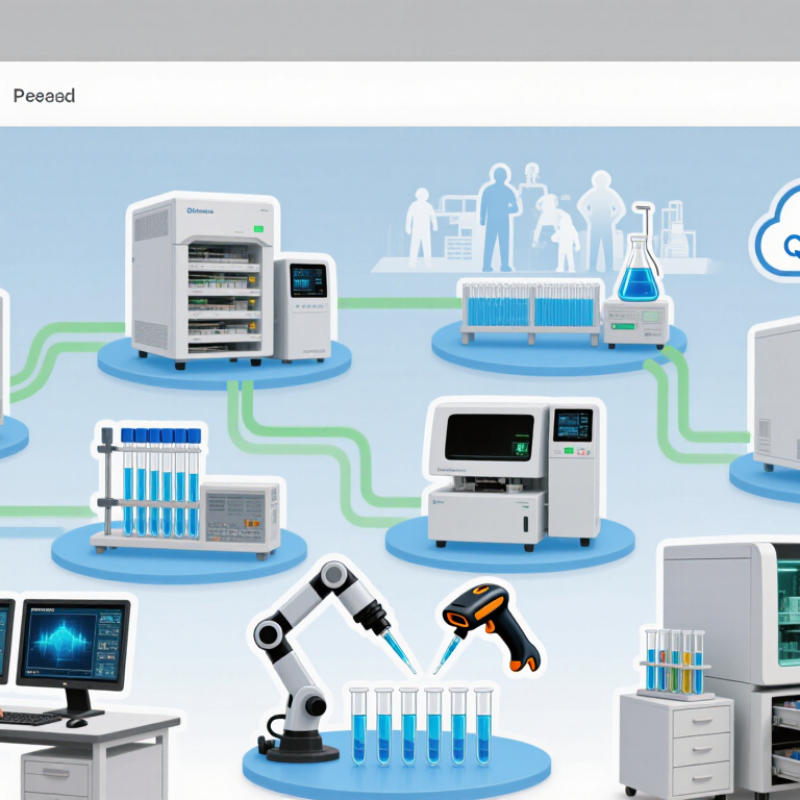
What Laboratory Systems Do and Why They Matter
Laboratory systems connect people, specimens, instruments, procedures, and data. They are more than machines on a bench. A complete system supports sample identification, testing, quality checks, result review, and secure reporting. When one step fails, a mislabeled tube or delayed result can undermine otherwise accurate work. Small details matter.
The access gap is substantial. The Lancet Commission on diagnostics estimated that 47% of people in low- and middle-income countries have little or no access to diagnostic services (The Lancet, 2021). WHO reported that 8.2 million people were newly diagnosed with tuberculosis in 2023, the highest annual figure since global monitoring began (Global Tuberculosis Report 2024). These figures show why laboratories need reliable workflows and enough trained staff, not merely advanced equipment.
A practical system should fit local test volumes, power stability, maintenance capacity, and data infrastructure. Not just instruments.
In procurement, buyers can compare service support, consumable availability, quality controls, and interoperability. A polished dashboard can still hide weak sample tracking. And no platform removes the need for human review; that remains an area teams must keep questioning.
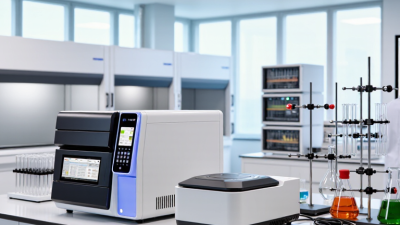
The Seven Main Types of Laboratory Systems
Laboratory systems are designed around the work, not just the room. Analytical laboratories use instruments to measure substances in samples, often with controlled temperature and clean preparation benches. Clinical laboratories process patient specimens, so traceable labeling, validated procedures, and dependable result reporting are essential. Research laboratories support changing experiments; flexible benches and accessible utilities can matter more than a fixed layout. Small details matter.
Biosafety laboratories use defined containment measures to reduce exposure risks when handling biological materials. Their design and operating procedures depend on the work being performed and a documented risk assessment. Cleanroom laboratories control airborne particles through filtration, monitored airflow, and gowning practices. Environmental testing laboratories examine samples such as water, soil, or air, so sample preservation and contamination prevention are central. The categories overlap. That is normal.
Quality-control laboratories in manufacturing check whether materials and finished products meet established specifications. They may need calibrated equipment, controlled records, and clear separation between incoming samples and released products. For global buyers, the right system depends on sample volume, staff training, maintenance access, and local facility conditions. A polished floor plan cannot compensate for weak procedures. Nor can automation fix unclear responsibilities. Needs change over time, and a system that works today may require review as methods or workloads shift.
Core Features and Differences Across the Seven Systems
Laboratory software is not one product category. The seven common systems serve different workflows: a laboratory information management system tracks samples, batches, and inventory; a laboratory information system manages clinical orders and results. An electronic lab notebook captures experimental notes, while a laboratory execution system guides staff through approved procedures. A scientific data management system organizes files and instrument outputs. A chromatography data system processes chromatography runs. A quality management system controls documents, training records, and corrective actions. Different jobs.
Their differences show up on the bench. A sample-tracking system may show a tube’s location and status, while an execution system presents the next protocol step. A notebook supports flexible research; a quality system emphasizes controlled revisions and audit trails. The World Health Organization’s Laboratory Quality Management System handbook identifies 12 quality system essentials, including equipment, documents, and process control. Buyers can use these areas to check whether software supports routine quality work, not just attractive dashboards.
Market growth signals rising investment, not automatic fit. Grand View Research estimated the global laboratory information management system market at about USD 2.1 billion in 2023, with projected growth through 2030. That is a forecast. It does not prove one system suits every laboratory. Before choosing, test a real workflow: barcode a sample, correct a result, retrieve its history, and export the record. Check instrument connections, user permissions, local language support, and data migration costs. These details are easy to underestimate. I would still pilot the system with actual staff and imperfect data before committing.
How Global Buyers Can Compare Laboratory Systems
What Are the 7 Best Laboratory Systems for Global Buyers?
How Global Buyers Can Compare Laboratory Systems
Global buyers should compare laboratory systems by how well they fit daily work, not by feature count. Map each system to sample volume, test types, staffing, and reporting needs. A busy lab may need automated sample handling, while a smaller team may value simple setup and flexible modules. Check whether instruments share data smoothly with existing software. Small details matter: screen readability, clear error messages, and easy-to-clean surfaces can shape a full workday.
Compare performance under realistic conditions. Ask for a demonstration using representative samples, and record setup time, repeatability, and operator steps. Then review training options, spare-part availability, service response times, and shipping requirements in your region. Confirm that power specifications, language support, and environmental limits suit the intended site. A spreadsheet helps, but it can hide inconvenient differences; score the factors your team truly uses. Compare the full cost of ownership, including installation, consumables, maintenance, and staff training, rather than purchase price alone. No system is perfect. Note unresolved questions, and ask suppliers to answer them in writing before making a decision.
Regional Compliance, Integration, and Deployment Considerations
What Are the 7 Best Laboratory Systems for Global Buyers?
Regional Compliance, Integration, and Deployment Considerations
Compare seven system families: LIMS, LIS, ELN, CDS, SDMS, QMS, and instrument-management platforms. Choose by workflow fit, not feature count. Local requirements shape what each system must retain. Audit trails, electronic signatures, retention periods, access controls, and data residency may differ by region. Confirm expectations with local quality and privacy teams before configuration. Small details matter: date formats, decimal separators, bilingual labels, and support hours.
Integration is often the hard part. Map every instrument, identity service, business system, and clinical interface before procurement. Test sample identifiers, data transfers, and failed-message recovery. Standards such as HL7 and FHIR can help, but verify interfaces against actual device output. Gartner’s November 2023 forecast projected worldwide public-cloud spending of $679 billion in 2024, up 20.4%. This signals broader cloud adoption, not that cloud suits every lab. Assess latency, backup restoration, outages, and hosting expectations in a documented pilot.
Tips: Request a regional deployment checklist, data-export demonstration, and sample audit report. Test one bench-to-report workflow with real users. Keep a gap log; even a polished checklist can miss a local exception.
What Are the 7 Best Laboratory Systems for Global Buyers? - Regional Compliance, Integration, and Deployment Considerations
| System type | Best suited for | Core capabilities | Regional compliance considerations | Integration and deployment considerations |
|---|---|---|---|---|
| Laboratory Information Management System (LIMS) | Testing, quality-control, research, and contract laboratories managing samples and results. | Sample registration and tracking, workflows, test assignment, result review, reporting, and audit trails. | For applicable US FDA-regulated records, assess 21 CFR Part 11 controls. Testing and calibration labs may also need processes aligned with ISO/IEC 17025. Local rules depend on the sector and intended use. | Map sample identifiers, methods, units, and result interfaces before migration. Confirm instrument connectivity, multilingual needs, local hosting options, and site-specific workflows. |
| Electronic Laboratory Notebook (ELN) | Research and development teams documenting experiments, methods, observations, and collaboration. | Structured experiment records, templates, version history, search, collaboration, and controlled access. | Where electronic records or signatures are regulated, assess applicable controls such as US 21 CFR Part 11 or EU GMP Annex 11. Personal-data handling may also trigger regional privacy requirements, including GDPR in the EU or PIPL in China. | Check links to inventory, project, and data-storage systems. Define intellectual-property access, retention, export formats, identity management, and cross-border data-transfer requirements. |
| Chromatography Data System (CDS) | Laboratories acquiring and processing chromatography data for analytical testing. | Instrument acquisition, processing methods, sequence management, review, reporting, and data traceability. | In regulated environments, assess audit trails, access controls, record retention, and electronic-signature requirements against applicable regulations, such as 21 CFR Part 11 or EU GMP Annex 11. | Verify compatibility with installed instruments, supported operating environments, network design, and data migration needs. Validate configured workflows for intended use. |
| Scientific Data Management System (SDMS) | Organizations that need to organize, preserve, and retrieve data from multiple laboratory sources. | Centralized data capture, indexing, metadata management, search, retention, and controlled access. | Retention, data-integrity, privacy, and residency obligations vary by jurisdiction and record type. Define retention schedules and access controls according to applicable local requirements. | Inventory data sources and file formats first. Plan storage capacity, backup and recovery, metadata standards, interfaces, and any restrictions on cross-border data transfers. |
| Laboratory Execution System (LES) | Labs seeking consistent execution of approved procedures at the bench. | Step-by-step workflows, procedural prompts, required data entry, decision checks, and execution records. | For GxP use, establish controlled procedures, role-based access, change control, and appropriate validation. Applicable electronic-record rules depend on the product, market, and regulated activity. | Align procedures with actual bench practices and connect to relevant LIMS, ELN, or instrument workflows. Plan for training, procedure updates, and site-level configuration. |
| Quality Management System (QMS) | Laboratories managing quality processes, audits, deviations, and corrective actions. | Document control, training records, nonconformance management, CAPA, audit planning, and change control. | Requirements depend on the laboratory’s sector and accreditation scope. ISO 9001 and ISO/IEC 17025 address different requirements; neither makes software compliant by itself. | Integrate with identity, training, and laboratory systems where appropriate. Define document ownership, approval routes, local language needs, and global versus site-specific processes. |
| Laboratory Inventory and Resource Management System | Labs tracking reagents, consumables, standards, equipment, and shared resources. | Stock levels, locations, lot and expiry tracking, reorder workflows, equipment records, and usage history. | Consider local chemical, safety, import, and waste-management obligations. Requirements vary by substance and jurisdiction; inventory software does not replace required safety documentation or procedures. | Check purchasing and finance interfaces, barcode or RFID needs, unit and currency handling, and support for multiple locations. Establish ownership of supplier, material, and equipment data. |
Note: These are seven common laboratory-system categories, not a universal ranking. Regulatory applicability depends on the laboratory’s activities, markets, and intended use. Buyers should assess requirements and validate configured systems using a documented, risk-based approach.